Caliber Technologies

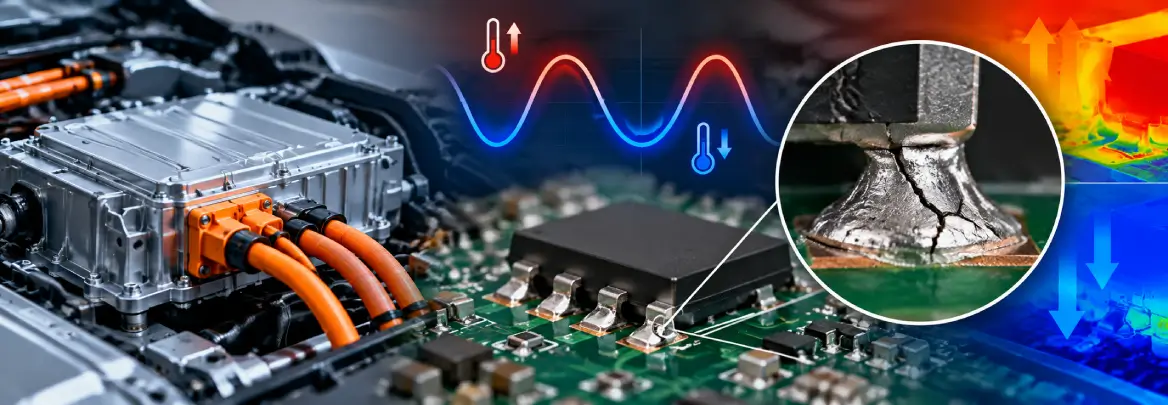
How Thermal Cycling Affects EV Power Electronics Solder Joint Reliability

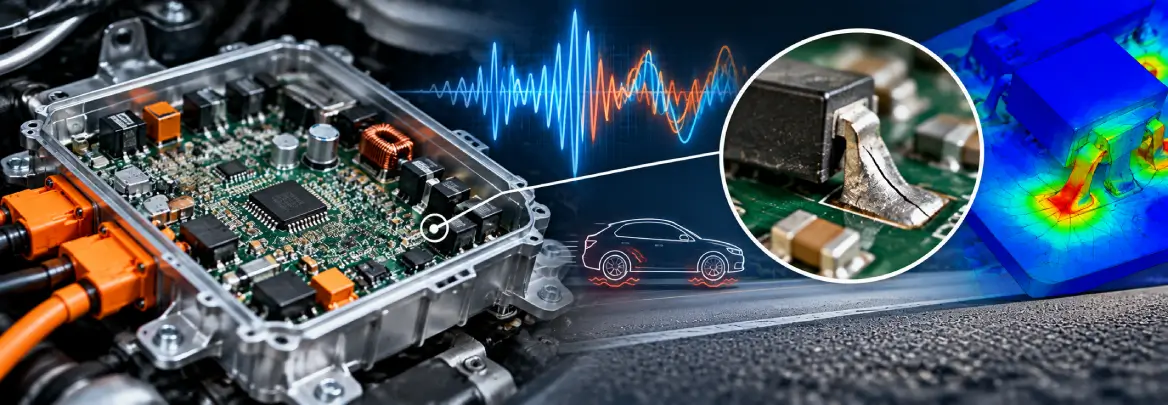
Why Thermal Cycling Causes Reliability Problems in EV Power Electronics EV power electronics experience repeated temperature changes during normal vehicle operation. Power-up, high-load driving, regenerative braking and shutdown create thermal cycles that cause components and circuit boards to expand and contract. Solder joints connect electronic components to printed circuit boards…
Read More

How to Assess EV Onboard Charger Enclosure Durability Under Road Vibration Loads

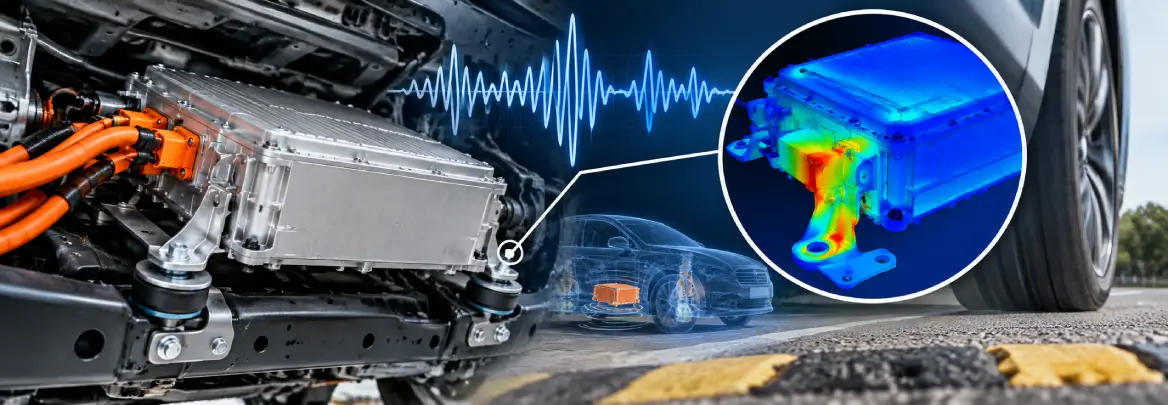
Why Onboard Charger Enclosures Face Structural Challenges An electric vehicle onboard charger (OBC) converts incoming AC power into DC power for battery charging. Its enclosure must protect internal electronics while supporting mounting loads and withstanding vibration transmitted through the vehicle structure. The challenge is particularly important in compact EV platforms,…
Read More

How Vibration Causes Fatigue Failure in EV Power Electronics Circuit Boards

Why Vibration Is a Reliability Challenge for EV Power Electronics Electric vehicles expose electronic assemblies to mechanical loads generated by road inputs, vehicle structures, powertrain operation and component mounting. These loads can reach inverter control boards, onboard charger electronics and other power electronics assemblies. Although a circuit board may pass…
Read More

Using Electromagnetic-Thermal Simulation to Optimize Electric Motor Power Density

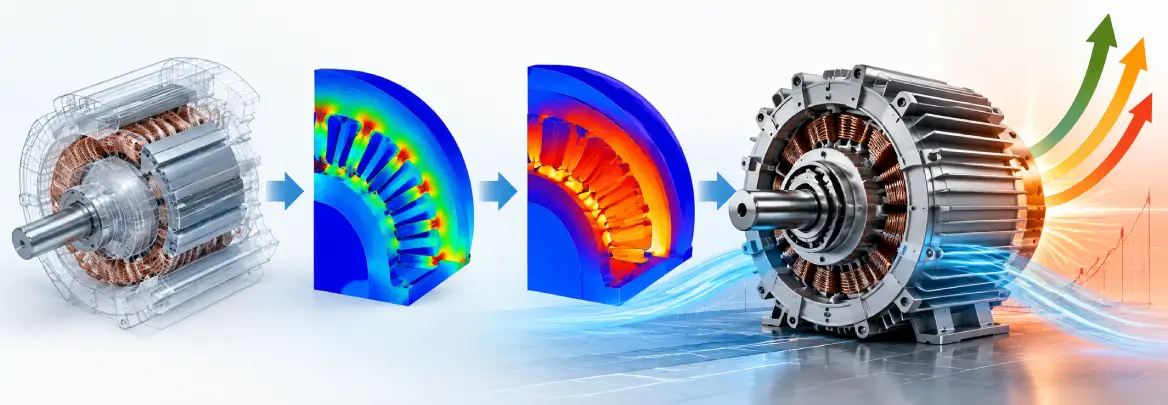
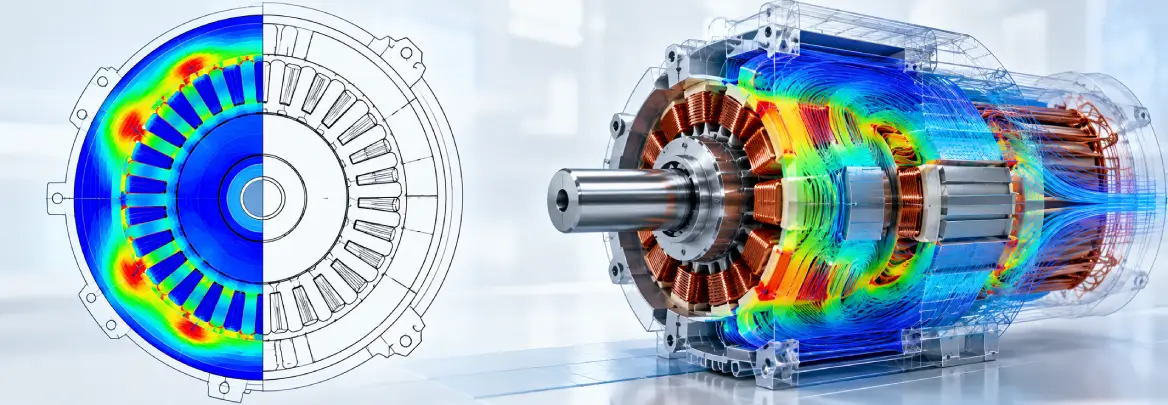
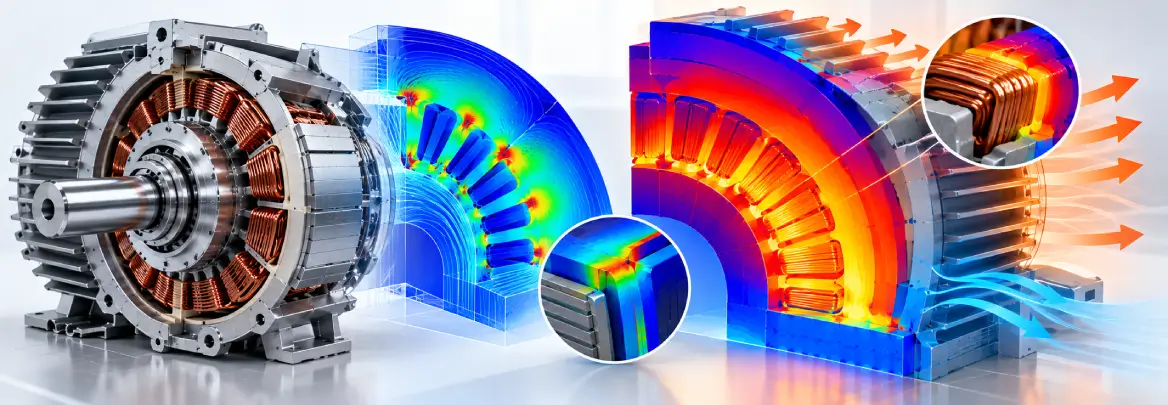
Electric motor designers are continuously balancing power, efficiency, size, weight, temperature, and reliability. Increasing power output within a smaller package can improve system-level performance, but higher power density often increases electromagnetic losses and thermal loading. This creates a fundamental product-development problem. A motor cannot be optimized for electromagnetic performance alone…
Read More

How Winding and Insulation Design Affect Electric Motor Performance

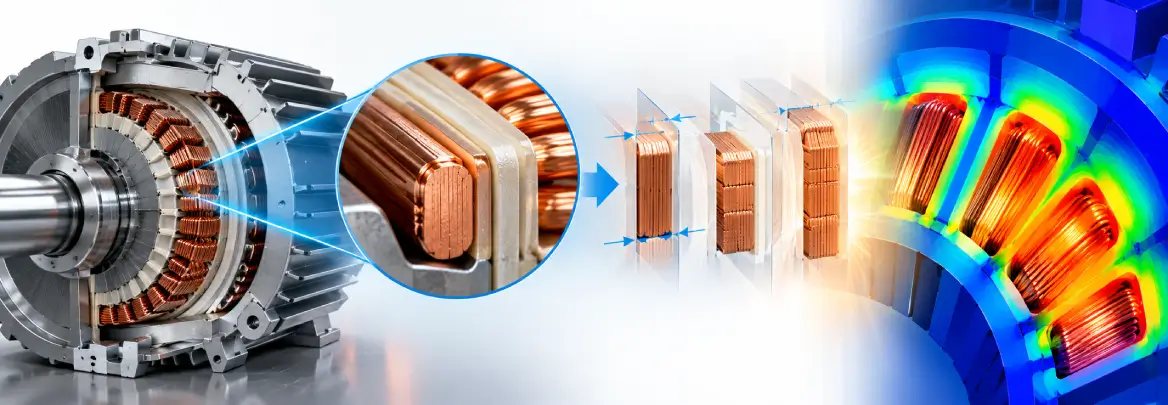
Electric motor performance is influenced by more than electromagnetic geometry and conductor selection. Winding and insulation design can affect the amount of copper that fits inside a slot, winding resistance, electrical losses, heat transfer, and ultimately the motor’s thermal operating margin. Insulation is essential for electrical isolation and winding reliability,…
Read More

Hairpin vs. Wire-Wound Electric Motors: Electromagnetic, Thermal and Design Considerations

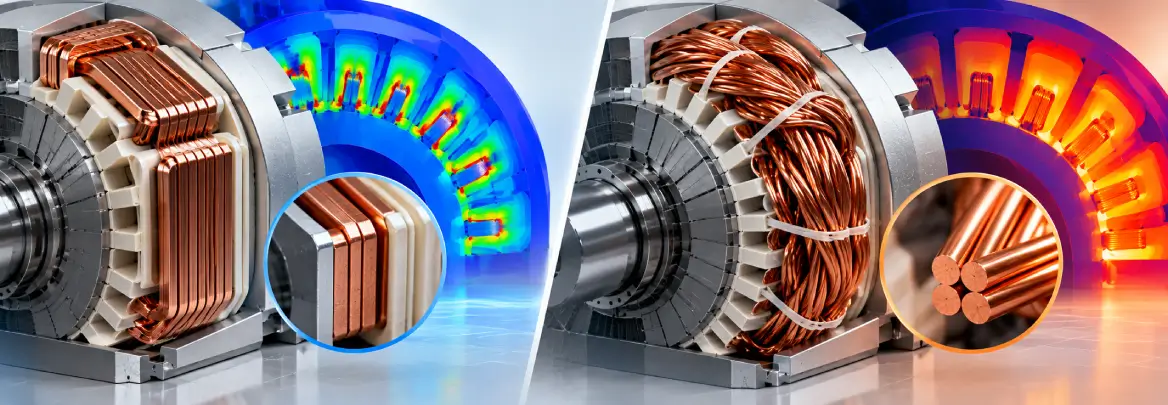
Winding architecture has a direct influence on an electric motor’s electrical performance, thermal behaviour, manufacturability, and packaging. Hairpin and wire-wound motors use different conductor geometries and winding arrangements, which affect slot utilization, resistance, current density, copper losses, heat transfer, and manufacturing processes. Neither architecture is universally preferable. The appropriate choice…
Read More

Electromagnetic and Thermal Analysis of Electric Motors

Electric motor performance cannot always be evaluated from electromagnetic performance alone. Torque, efficiency, flux density, and back EMF may meet the design requirements while localized losses create excessive temperatures in windings, cores, magnets, or other components. This makes electromagnetic and thermal analysis of electric motors a connected multiphysics problem. Electromagnetic…
Read More