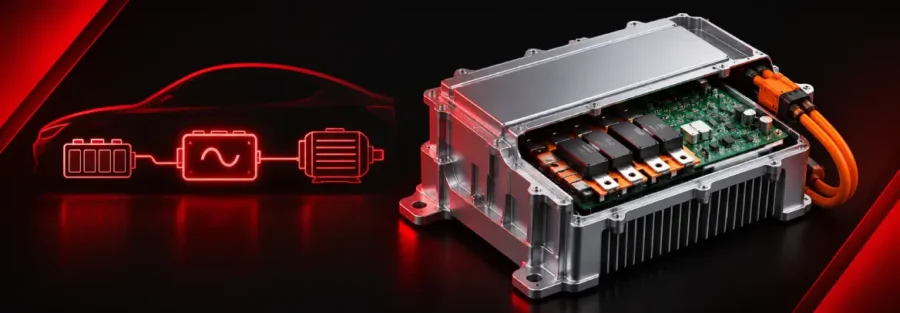
An electric vehicle inverter is an important component of the EV powertrain. It converts direct current (DC) electricity from the battery into alternating current (AC) electricity required by the electric motor.
The inverter also controls the electrical power supplied to the motor based on driving requirements. During acceleration, it regulates motor operation to deliver the required torque and speed. During regenerative braking, it helps convert electrical energy generated by the motor back into DC power for the battery.
Inverter design plays an important role in EV performance, energy efficiency, thermal management and powertrain reliability.
What Does an Electric Vehicle Inverter Do?
The inverter manages the flow of electrical energy between the battery and electric motor. Its operation changes depending on whether the vehicle is accelerating, maintaining speed or braking.
Its main functions include:
- DC to AC Conversion: Converts DC power from the battery into AC power for the electric motor.
- Motor Speed Control: Regulates the frequency and voltage supplied to the motor to control operating speed.
- Torque Control: Adjusts motor current to deliver the required torque under different driving conditions.
- Regenerative Braking: Controls electrical power generated by the motor during braking and supports its conversion back into DC power.
- Power Management: Controls electrical energy delivery based on vehicle operating requirements.
What Are the Main Components of an EV Inverter?
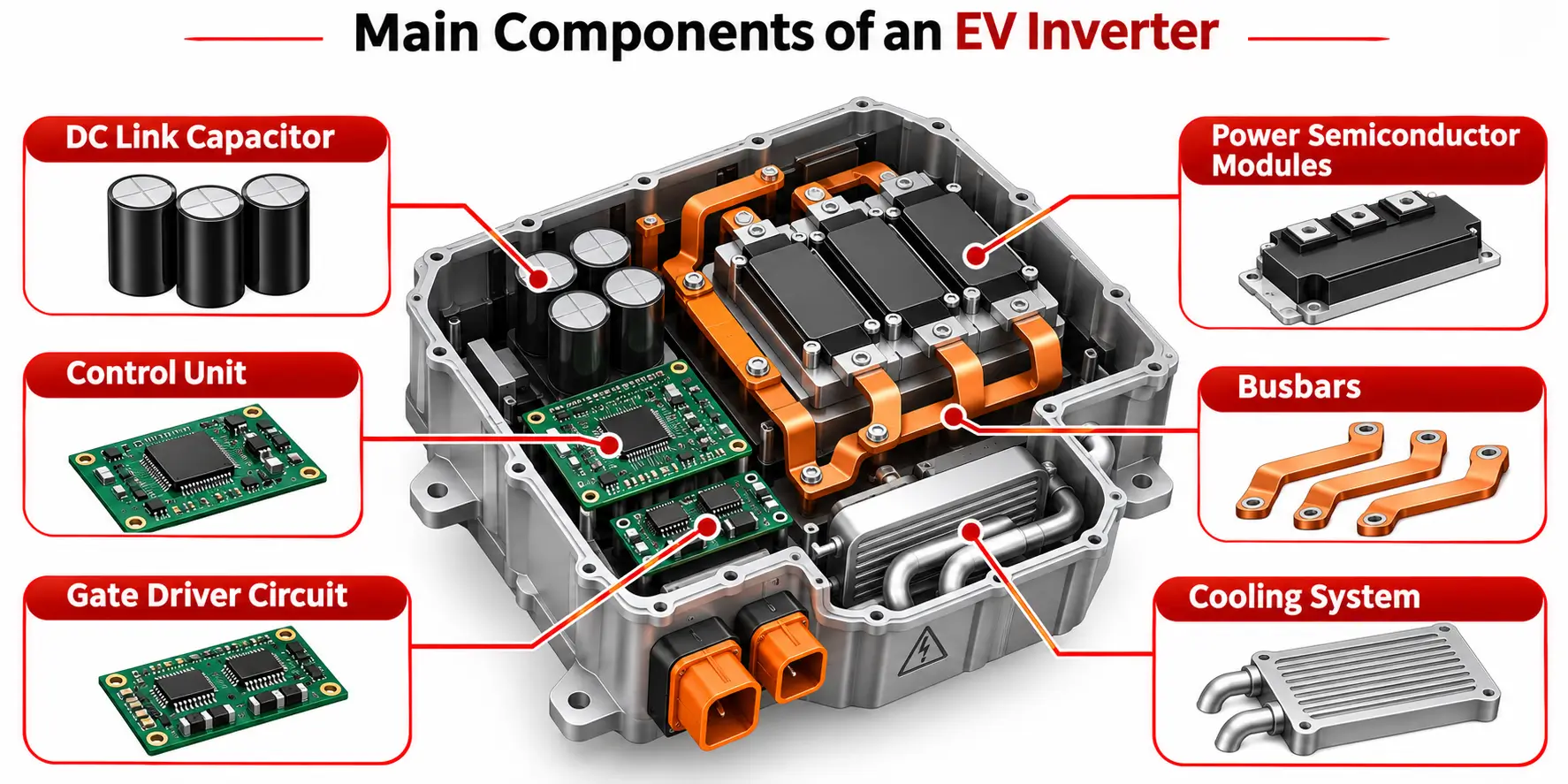
An EV inverter consists of several electrical, electronic and thermal components that work together to control power conversion.
Power Semiconductor Modules: These contain switching devices such as IGBTs or MOSFETs. They rapidly switch electrical current to generate the required AC output.
DC Link Capacitor: Stores electrical energy temporarily and helps stabilise the DC voltage supplied to the inverter switching circuit.
Busbars: Provide electrical connections between the DC input, capacitor and power semiconductor modules.
Gate Driver Circuit: Controls the switching operation of the semiconductor devices based on signals from the control system.
Control Unit: Processes motor control commands and manages inverter switching based on operating conditions.
Cooling System: Removes heat generated by power semiconductor devices and other components during operation.
What Are the Different Types of Electric Vehicle Inverters?
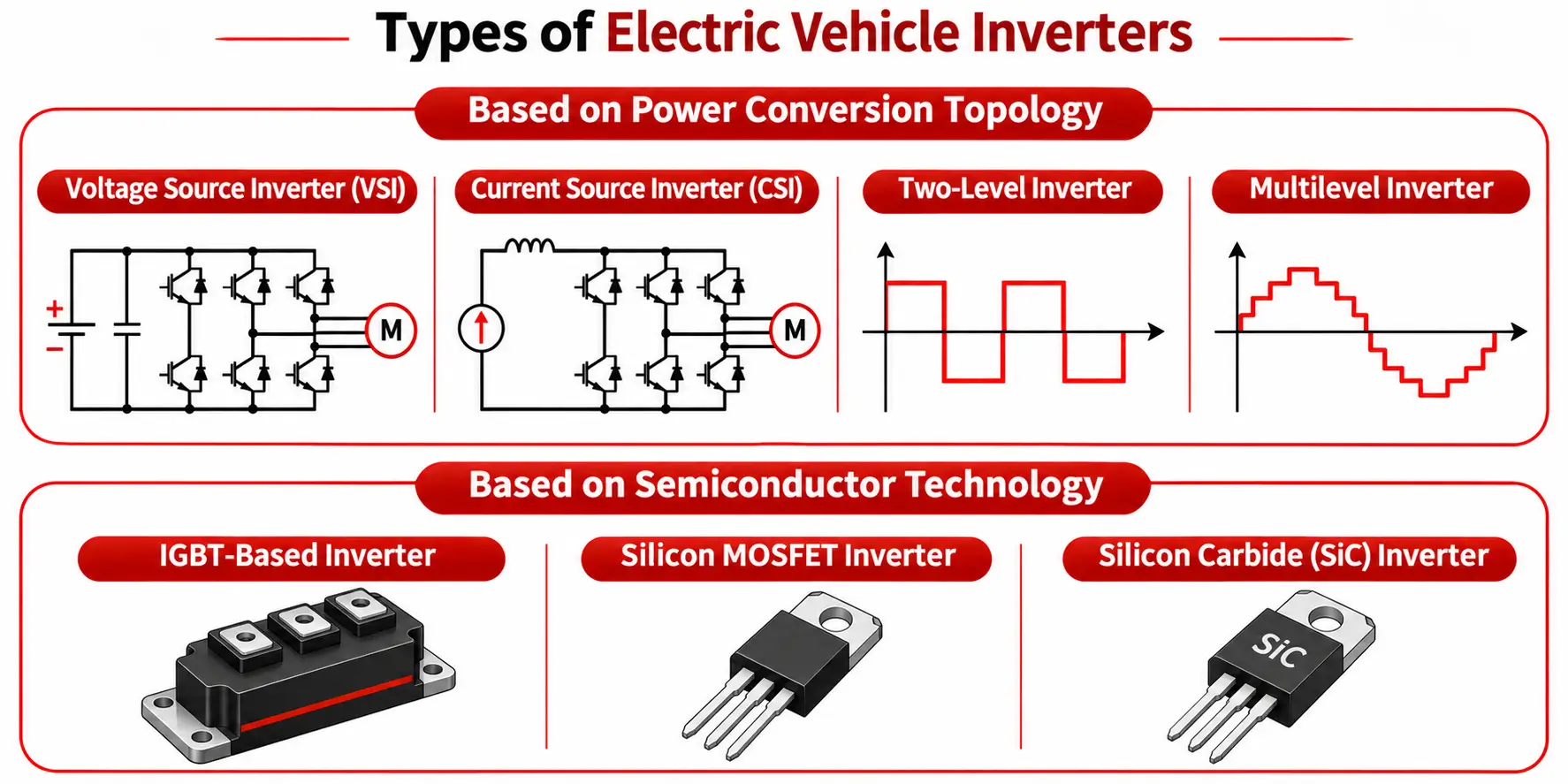
EV inverters can be classified based on their power conversion topology and semiconductor technology.
Voltage Source Inverter (VSI): Uses a DC voltage source to generate controlled AC output. It is widely used in electric vehicle traction systems.
Current Source Inverter (CSI): Uses a controlled DC current source to supply AC power. It is less common in modern EV traction applications.
Two-Level Inverter: Uses semiconductor switching devices to generate two voltage levels at each output phase. It is commonly used in traction inverter designs.
Multilevel Inverter: Generates multiple voltage levels to produce a stepped AC output. Depending on the topology, it can help reduce harmonic distortion and switching losses.
Inverters also use different semiconductor technologies:
- IGBT-Based Inverters: Commonly used in traction applications where high voltage and power handling are required.
- Silicon MOSFET Inverters: Used in applications requiring efficient switching, particularly at lower voltage ranges.
- Silicon Carbide (SiC) Inverters: Offer lower switching losses and support higher switching frequencies and operating temperatures in suitable designs.
The choice depends on voltage level, power requirements, switching frequency, thermal limits, efficiency targets and cost.
How Does an EV Inverter Work?
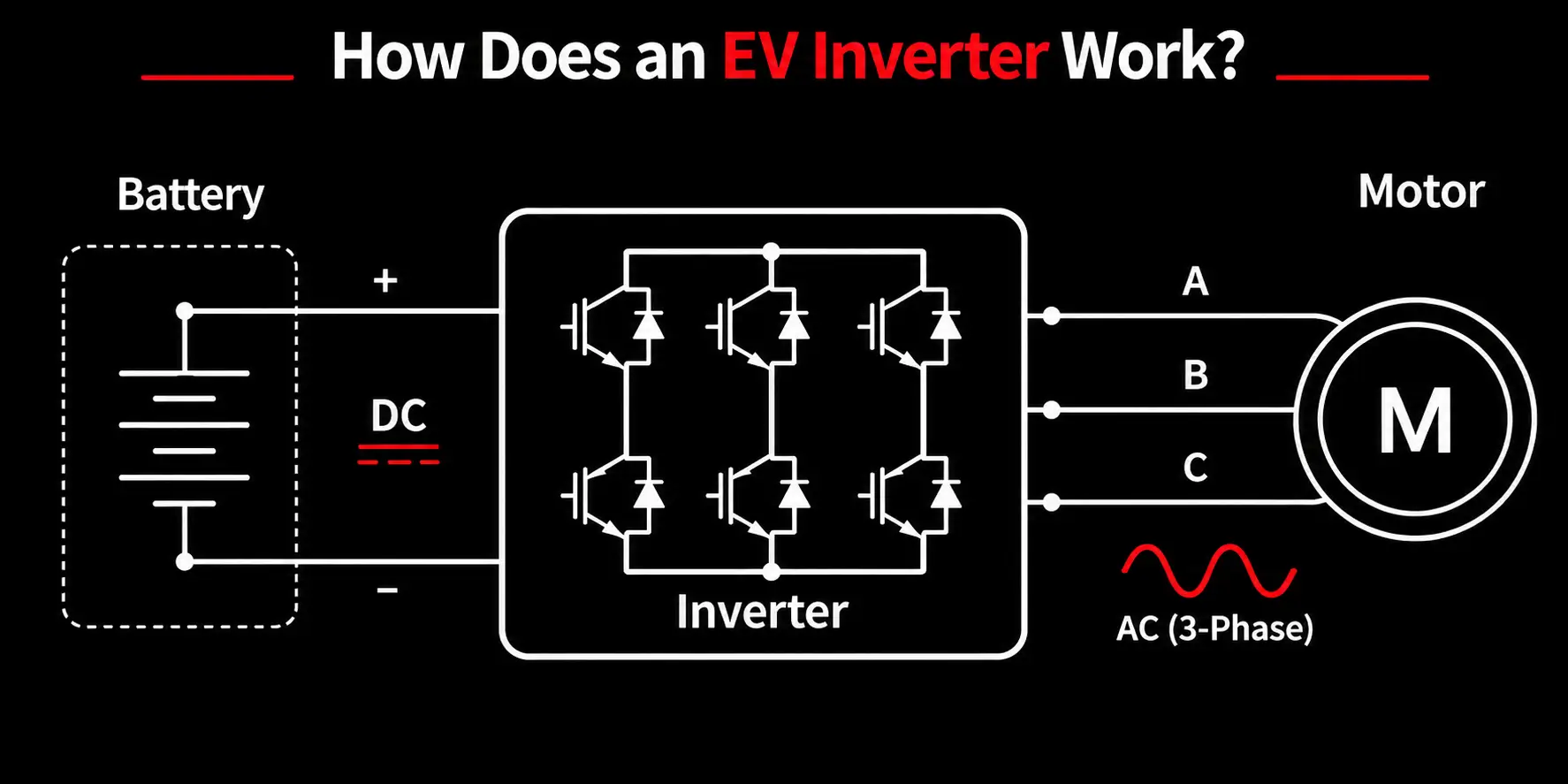
The inverter controls electrical power flow between the battery and motor through rapid switching of semiconductor devices.
The basic working process involves the following steps:
- DC Power Supply: The battery supplies DC electrical power to the inverter
- Power Switching: Semiconductor devices switch the DC input at controlled intervals.
- AC Output Generation: The switching circuit produces a three-phase AC output for the motor.
- Motor Control: The inverter adjusts output voltage, frequency and current to control motor speed and torque.
- Regenerative Operation: During braking, the motor operates as a generator and the inverter controls the flow of electrical energy back to the battery.
The inverter continuously adjusts its switching operation according to motor speed, torque demand and vehicle operating conditions.
What Factors Affect EV Inverter Design?
EV inverter development requires careful consideration of electrical performance, thermal behaviour, packaging and reliability.
- Power Rating: The inverter must handle the motor’s required power and torque demands.
- Operating Voltage: Semiconductor devices and electrical connections must support the battery’s voltage range
- Switching Frequency: Switching frequency influences power losses, output quality and electromagnetic interference.
- Thermal Management: Semiconductor devices generate heat during operation and require suitable cooling arrangements.
- Electrical Efficiency: Switching and conduction losses affect overall powertrain efficiency.
- Packaging: The inverter must fit within the available vehicle space while meeting mounting and connection requirements.
- Reliability: Components must withstand electrical, thermal and mechanical stresses throughout vehicle operation.
How Is EV Inverter Performance Evaluated?
Engineering analysis and simulation help evaluate inverter performance before physical prototypes are developed.
Different analysis methods can be used depending on the engineering requirement.
Thermal Analysis: Evaluates heat generation and temperature distribution in semiconductor modules, busbars and other components.
Structural Analysis: Assesses stress and deformation in the inverter housing, mounting brackets and internal supporting structures.
Vibration Analysis: Evaluates how the inverter assembly responds to vehicle-induced vibration and mechanical loads.
Electrical and Electromagnetic Analysis: Helps examine switching behaviour, electrical losses and electromagnetic effects within the inverter system.
Thermal Cycling Assessment: Evaluates the effects of repeated temperature changes on components and connections.
These studies help engineers identify potential design issues, compare configurations and improve component reliability.
EV Inverter Engineering Support from Caliber Technologies
Caliber Technologies provides engineering design and simulation support for electric vehicle powertrain and power electronics components.
Our capabilities include thermal analysis, structural FEA, vibration assessment and engineering validation for components such as inverter housings, busbars and supporting structures.
We help engineering teams evaluate component behaviour under defined electrical, thermal and mechanical operating conditions.
If you are developing an EV inverter or working on power electronics integration, contact our engineering team to discuss your requirements.