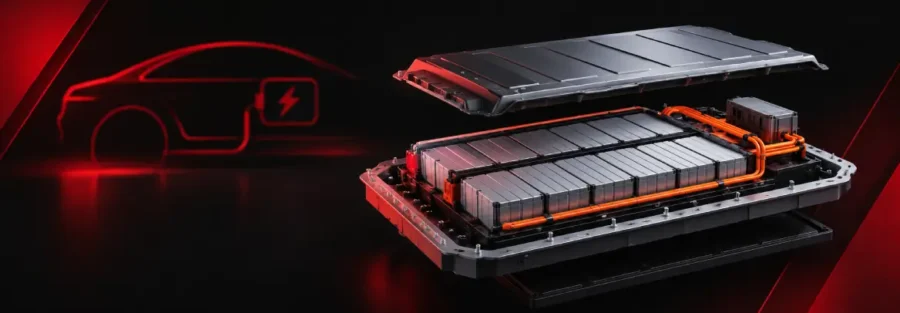
An electric vehicle battery pack is more than a collection of battery cells. It is an integrated system designed to store electrical energy and deliver power to the vehicle’s electric motor.
EV battery pack design involves selecting the right cells, arranging them into modules, developing the structural enclosure and integrating thermal management, electrical connections and safety systems.
A well-designed battery pack must meet several requirements, including energy capacity, structural strength, thermal performance, weight, durability and available installation space.
What Are the Main Components of an EV Battery Pack?
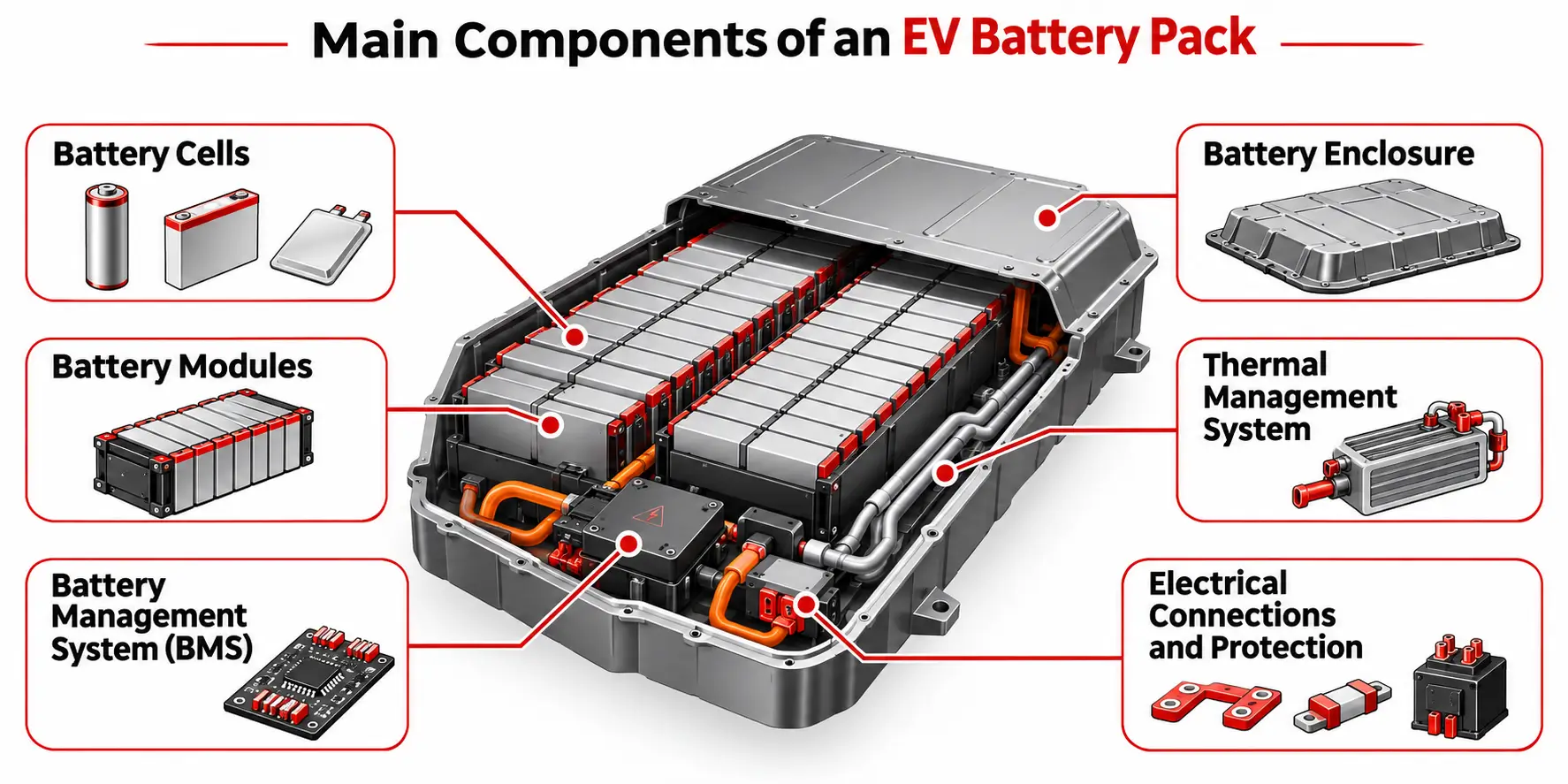
An EV battery pack consists of several interconnected components. Each has a specific role in storing energy, managing electrical power and protecting the battery system.
1. Battery Cells
Battery cells are the basic energy storage units. They store electrical energy through electrochemical reactions and are available in different formats, including cylindrical, prismatic and pouch cells.
2. Battery Modules
Multiple cells are connected in series or parallel to form battery modules. Their arrangement determines the voltage and capacity required for the battery system.
3. Battery Management System (BMS)
The BMS monitors important battery parameters such as voltage, current and temperature. It helps manage charging, discharging and battery protection.
The enclosure houses and protects the battery cells, modules and associated components. It must provide structural support and withstand mechanical loads and environmental conditions.
5. Thermal Management System
The thermal management system controls battery temperature during charging, discharging and vehicle operation. Depending on the design, it may use air cooling, liquid cooling or other thermal management methods.
6. Electrical Connections and Protection
Busbars, connectors, fuses, contactors and other electrical components manage power distribution and help protect the battery system against electrical faults.
What Are the Different Types of EV Battery Pack Configurations?
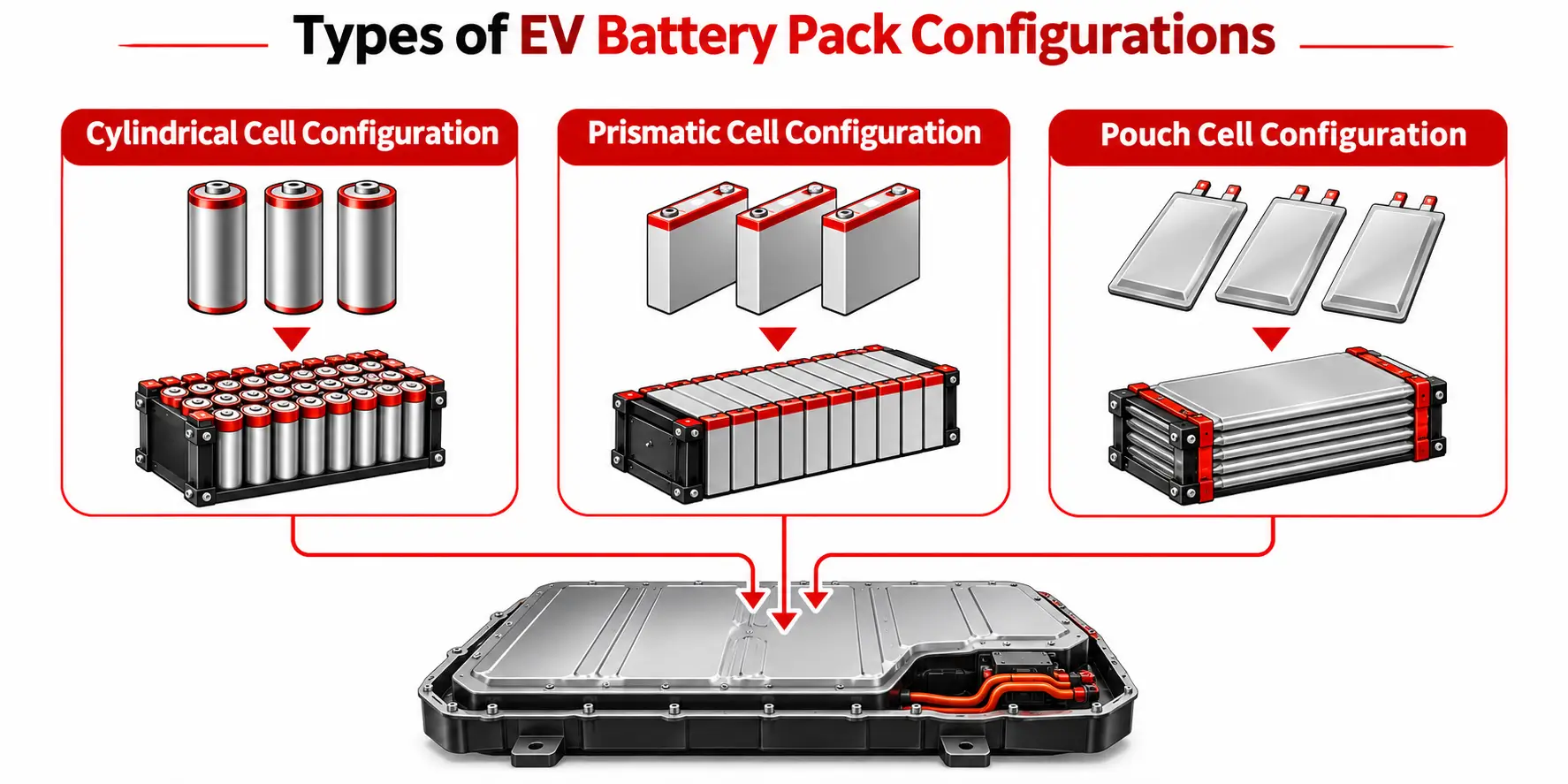
Battery pack configurations depend on cell arrangement, vehicle requirements, available space and manufacturing considerations.
Cylindrical Cell Configuration: Uses cylindrical battery cells arranged in groups within modules or directly inside the pack. This arrangement offers standardised cell formats and flexible packaging options.
Prismatic Cell Configuration: Uses rectangular cells that can be arranged efficiently within battery modules or pack structures. Their shape can help utilise available space.
Pouch Cell Configuration: Uses flat, flexible pouch-shaped cells. These can offer packaging flexibility but require suitable compression and mechanical support.
The choice depends on energy requirements, manufacturing processes, thermal management, structural design and overall vehicle packaging.
What Are the Key Considerations in EV Battery Pack Design?
Battery pack development requires balancing electrical, mechanical and thermal requirements. A change in one design area can affect the performance of the complete system.
Energy Density and Capacity: The battery must provide sufficient energy to meet the vehicle’s range and power requirements without adding unnecessary weight.
Structural Strength: The enclosure, mounting brackets and internal supports must withstand vehicle loads, vibration and other mechanical forces during operation.
Thermal Management: Battery cells must operate within their specified temperature range. Engineers need to consider heat generation, cooling requirements and temperature differences between cells.
Weight and Packaging: The battery pack must fit within the vehicle’s available space while meeting weight distribution, ground clearance and structural requirements.
Electrical Safety: Cell connections, busbars, insulation, fuses and contactors must be designed to handle expected electrical loads and fault conditions.
Durability: The battery pack must withstand repeated charging and discharging, road vibration, temperature changes and long-term operating conditions.
How Is Structural and Thermal Performance Evaluated?
Engineering analysis helps evaluate battery pack behaviour before physical prototypes are manufactured.
Structural Analysis: Finite Element Analysis (FEA) helps assess stress, deformation and stiffness in battery enclosures, mounting brackets, support structures and other components under defined mechanical loads.
Vibration Analysis: Engineers evaluate how battery pack structures respond to vibration generated by road conditions and vehicle operation.
Thermal Analysis: Thermal simulation helps examine temperature distribution, heat transfer and potential hot spots within battery modules and pack structures.
Thermo-Structural Analysis: Combined thermal and structural analysis helps evaluate how temperature changes affect component stresses and deformation.
These studies help identify potential design weaknesses and compare alternative configurations. However, simulation findings must be supported by appropriate material data, test conditions and physical validation.
What Challenges Do Engineers Face in EV Battery Pack Development?
Battery pack design involves several engineering challenges because multiple systems must work together within limited vehicle space.
- Maintaining structural stiffness without increasing pack weight.
- Managing heat generated during high-power charging and operation.
- Designing reliable mounting points and structural connections.
- Preventing excessive vibration and deformation.
- Managing thermal expansion across different materials.
- Integrating cooling systems without compromising packaging.
- Evaluating structural performance under different operating loads.
Addressing these challenges early in development can reduce design changes and help improve battery pack reliability.
EV Battery Pack Design and Simulation Support from Caliber Technologies
Caliber Technologies provides engineering design and simulation support for EV battery systems and related structural components.
Our capabilities include structural FEA, thermal analysis, vibration assessment and design validation for battery enclosures, mounting brackets and supporting structures.
We help engineering teams evaluate component strength, deformation, thermal behaviour and structural performance under defined operating conditions.
If you are developing an EV battery enclosure, battery mounting structure or related component, contact our engineering team to discuss your project requirements.