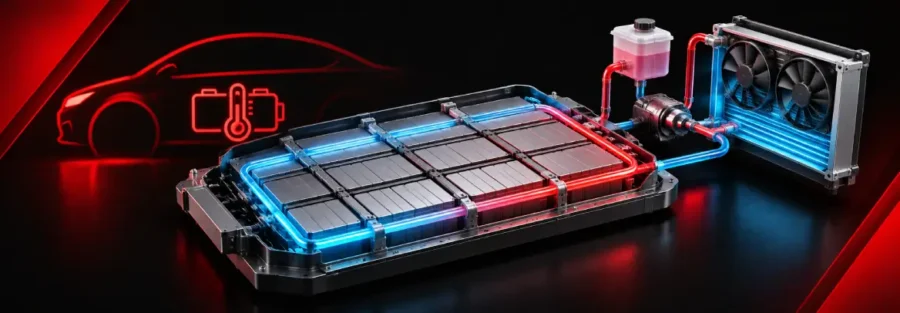
Battery thermal management is an important part of electric vehicle design. It controls the temperature of battery cells during charging, discharging and vehicle operation.
Lithium-ion batteries generate heat when they store and deliver electrical energy. If the temperature becomes too high or too low, battery performance, charging efficiency and service life can be affected.
An EV battery thermal management system helps maintain suitable operating temperatures across the battery pack. It also helps reduce temperature differences between individual cells, supporting consistent battery performance and reliable operation.
Why Is Thermal Management Important in EV Batteries?
Battery temperature directly affects how lithium-ion cells perform. Both excessive heat and low temperatures can create challenges during vehicle operation.
- Battery Performance: High or low temperatures can affect the battery’s ability to deliver power.
- Charging Efficiency: Battery temperature influences charging behaviour and the charging rate that can be safely supported.
- Battery Life: Repeated exposure to unsuitable temperatures can accelerate battery degradation.
- Temperature Uniformity: Large temperature differences between cells can create uneven operating conditions within the battery pack.
- Safety: Excessive heat can increase the risk of thermal runaway under certain failure conditions.
A properly designed thermal management system helps control these conditions throughout the battery’s operating cycle.
What Are the Different Types of EV Battery Thermal Management Systems?
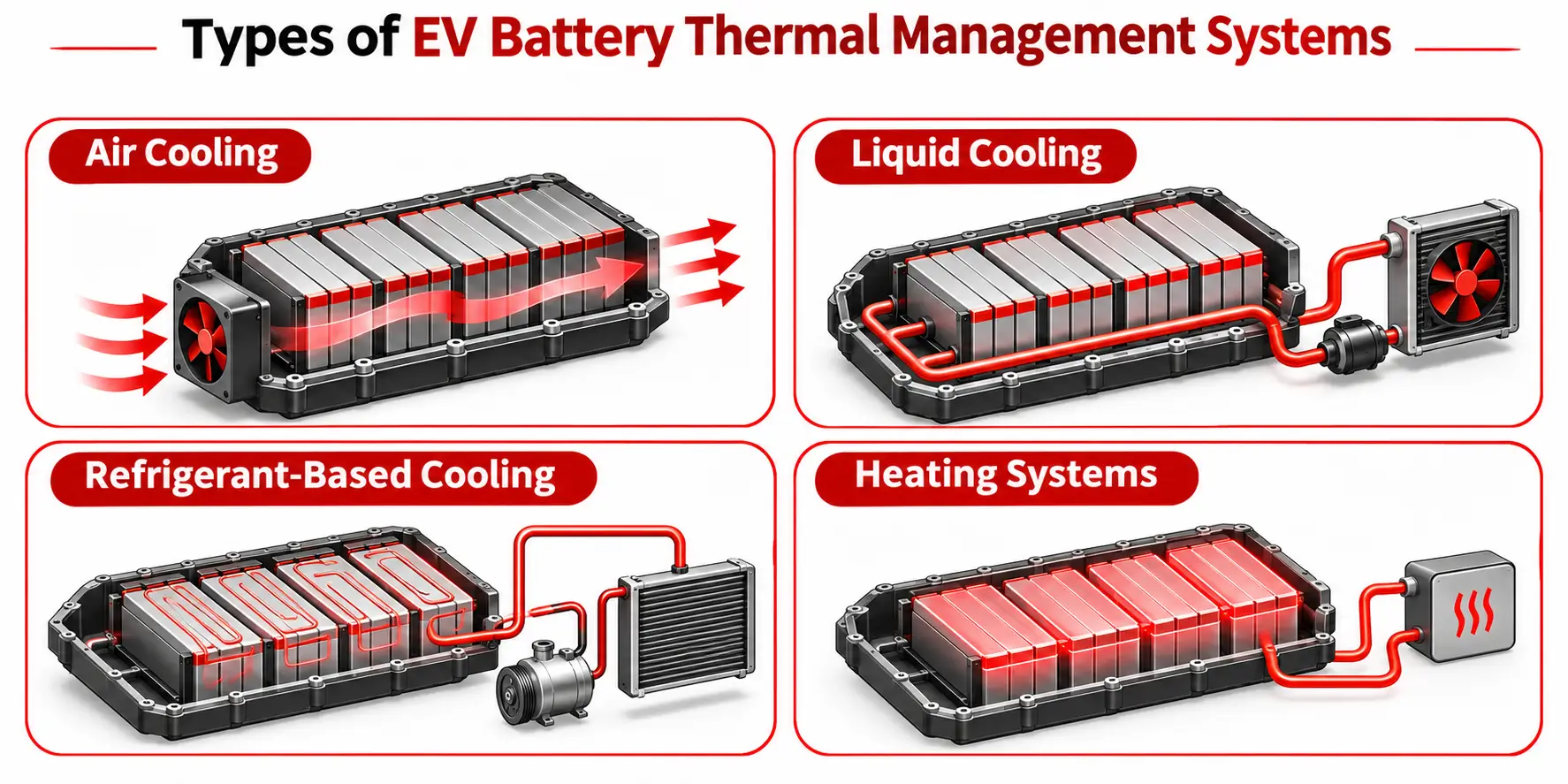
Electric vehicles use different cooling and heating methods depending on battery chemistry, pack design, power requirements and vehicle application.
1. Air Cooling
Air cooling uses natural or forced airflow to remove heat from battery cells. Fans and air ducts may be used to distribute air through the battery pack.
It has a relatively simple system layout and can be suitable for applications with lower cooling requirements. However, controlling temperature differences across larger battery packs can be challenging.
2. Liquid Cooling
Liquid cooling circulates coolant through channels or cooling plates positioned near battery cells or modules. Heat transfers from the cells to the coolant and is then removed through a heat exchanger or radiator.
It offers better control over battery temperature and is commonly used in electric vehicles with higher thermal management requirements.
3. Refrigerant-Based Cooling
Some EV thermal management systems use refrigerant circuits to remove heat from the battery pack. The battery may be connected to the vehicle’s air-conditioning system through a dedicated cooling arrangement.
This approach can provide active cooling when battery temperatures rise, depending on the system design.
4. Heating Systems
Battery heating systems help maintain suitable operating temperatures in cold conditions. They may use electric heaters, coolant-based heating or heat pump arrangements.
Heating is important because low battery temperatures can reduce available power and limit charging performance.
What Are the Main Components of an EV Battery Thermal Management System?
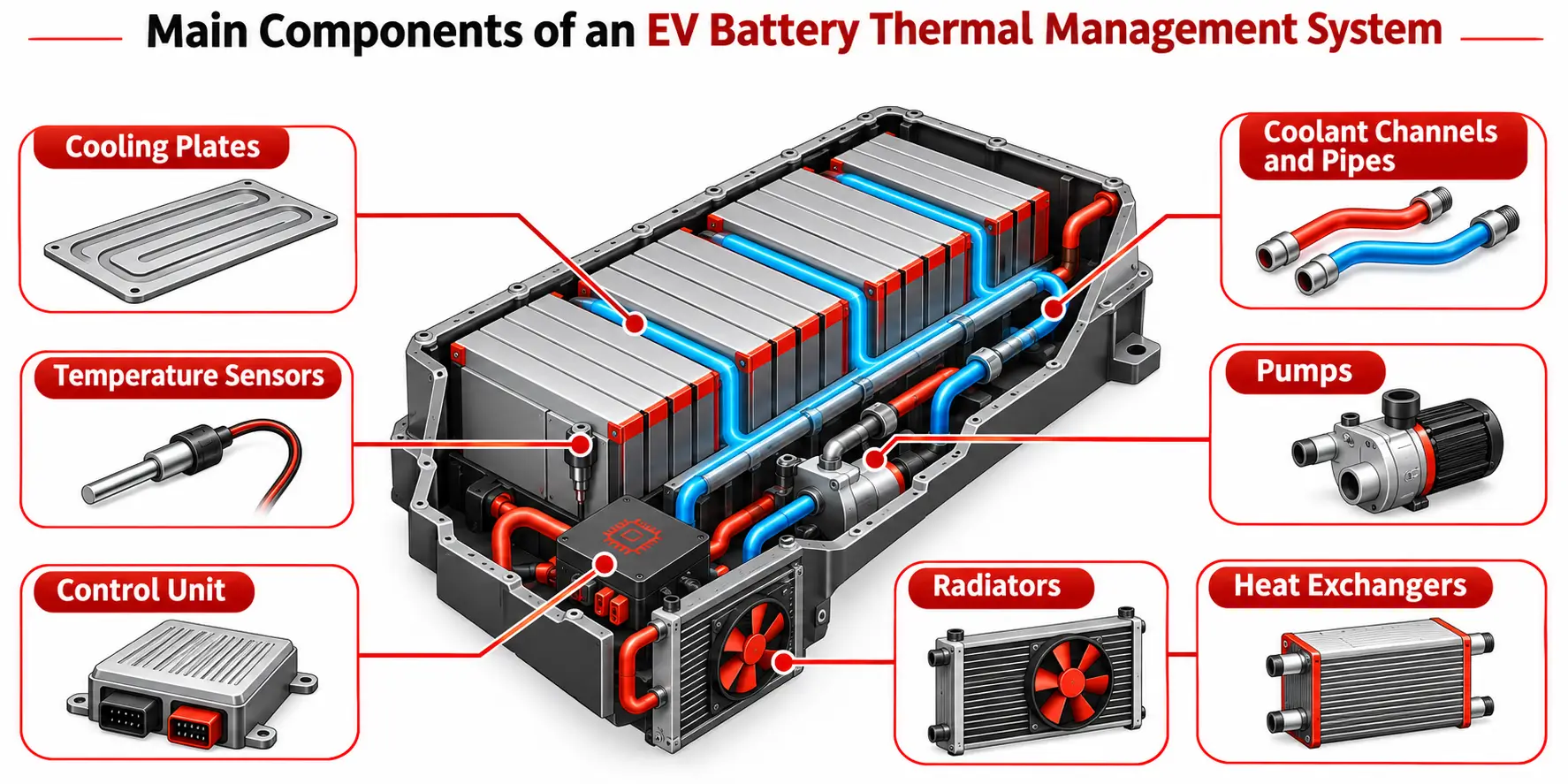
A battery thermal management system consists of several components that work together to control heat transfer.
- Cooling Plates: Positioned near battery cells or modules to transfer heat away from the battery.
- Coolant Channels and Pipes: Carry coolant through the thermal management circuit.
- Pumps: Maintain coolant circulation in liquid-cooled systems.
- Heat Exchangers: Transfer heat from the coolant to another medium.
- Radiators: Help release heat into the surrounding air.
- Temperature Sensors: Monitor battery temperatures at selected locations.
- Control Unit: Uses sensor information to manage cooling and heating operations.
The arrangement and capacity of these components depend on the battery pack’s thermal requirements.
What Factors Affect EV Battery Thermal Management Design?
Designing an effective battery thermal management system requires balancing cooling performance, energy consumption, packaging and system complexity.
Heat Generation: Battery cells generate heat during charging and discharging. Engineers must consider operating current, cell characteristics and usage conditions.
Cell Temperature Distribution: Temperature differences between cells can affect battery performance and ageing. Cooling arrangements should provide suitable temperature uniformity.
Cooling Capacity: The system must remove sufficient heat under different operating conditions, including high-power charging and demanding driving cycles.
Thermal Interface: Contact between battery cells, thermal interface materials and cooling plates influences heat transfer efficiency.
Packaging Constraints: Cooling components must fit within the available battery pack space without creating unnecessary weight or reducing usable energy capacity.
Energy Consumption: Pumps, fans and other thermal management components consume electrical power. Their operation must be considered when evaluating overall vehicle efficiency.
How Is Battery Thermal Performance Evaluated Through Simulation?
Thermal simulation helps engineers understand how heat moves through battery cells, modules and complete battery packs.
Computational Fluid Dynamics (CFD) and thermal analysis can be used to evaluate different aspects of battery thermal management.
- Temperature Distribution: Identify temperature differences across battery cells and modules.
- Heat Transfer: Evaluate heat movement between cells, cooling plates and coolant.
- Coolant Flow: Study flow distribution and pressure drop through cooling channels.
- Hot Spot Identification: Locate areas where temperatures may become higher than expected.
- Cooling System Performance: Compare different cooling channel arrangements and operating conditions.
- Thermal Expansion: Evaluate how temperature changes affect battery enclosure and supporting components.
These studies help engineers compare design alternatives and identify potential thermal issues before physical testing. Accurate results depend on appropriate cell heat generation data, material properties, boundary conditions and operating assumptions.
Battery Thermal Management Engineering Support from Caliber Technologies
Caliber Technologies provides thermal and engineering simulation support for electric vehicle battery systems and related components.
Our capabilities include CFD, thermal analysis and structural simulation to evaluate heat transfer, temperature distribution, cooling performance and structural behaviour under defined operating conditions.
We support engineering teams working on battery enclosures, cooling arrangements, mounting structures and other EV components.
If you are developing an EV battery cooling system or evaluating battery thermal performance, contact our engineering team to discuss your requirements.