Caliber Technologies

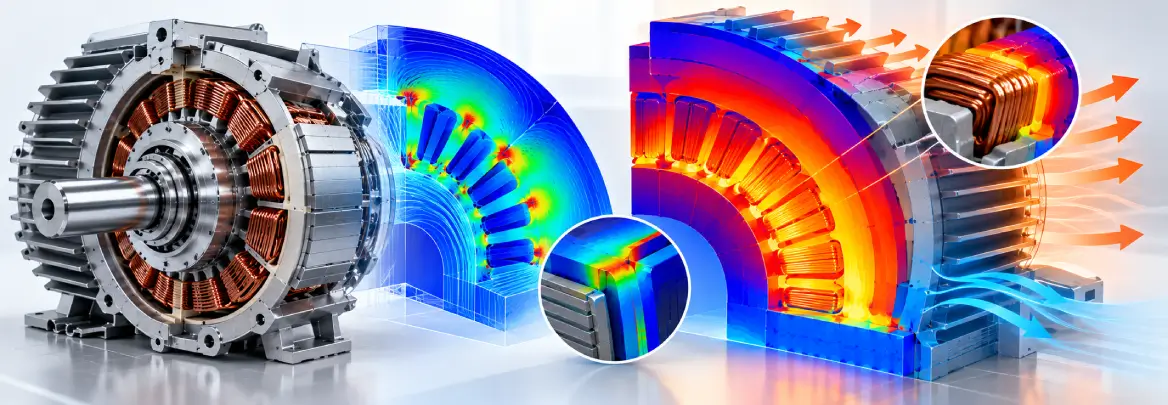
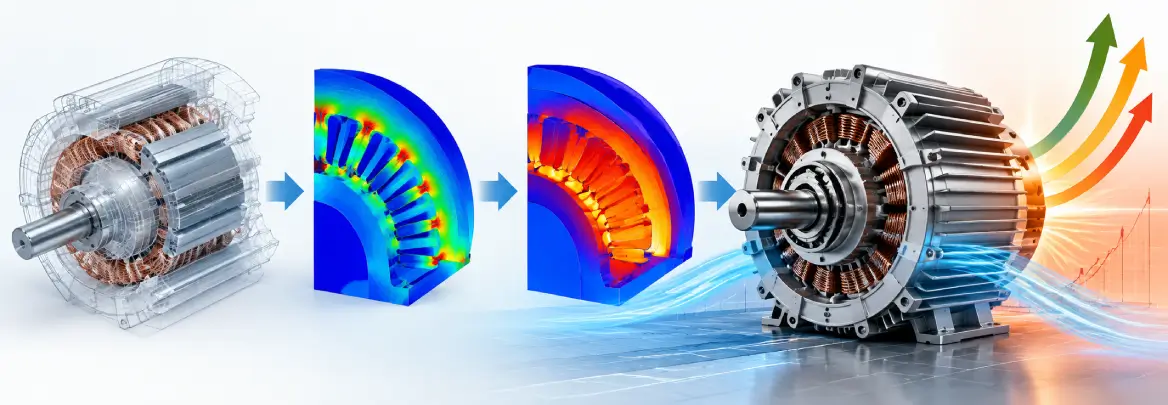
Using Electromagnetic-Thermal Simulation to Optimize Electric Motor Power Density

Electric motor designers are continuously balancing power, efficiency, size, weight, temperature, and reliability. Increasing power output within a smaller package can improve system-level performance, but higher power density often increases electromagnetic losses and thermal loading. This creates a fundamental product-development problem. A motor cannot be optimized for electromagnetic performance alone…
Read More

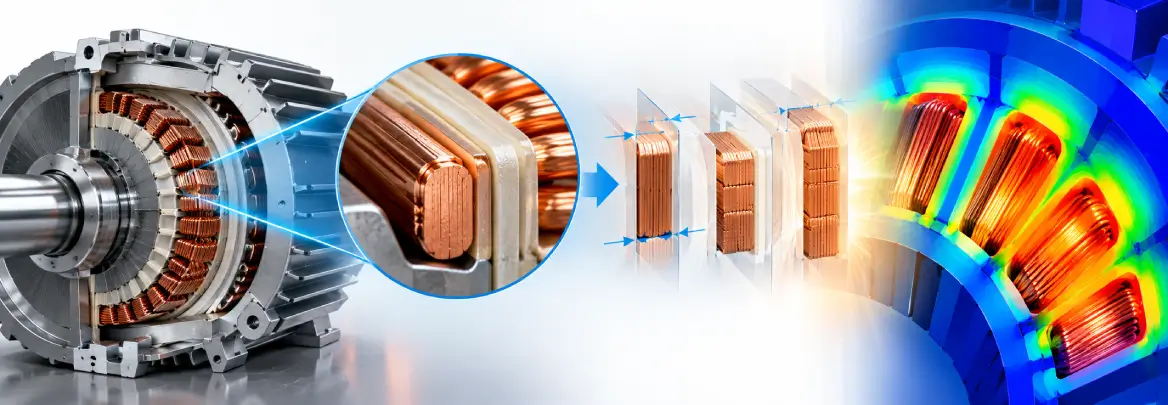
How Winding and Insulation Design Affect Electric Motor Performance

Electric motor performance is influenced by more than electromagnetic geometry and conductor selection. Winding and insulation design can affect the amount of copper that fits inside a slot, winding resistance, electrical losses, heat transfer, and ultimately the motor’s thermal operating margin. Insulation is essential for electrical isolation and winding reliability,…
Read More

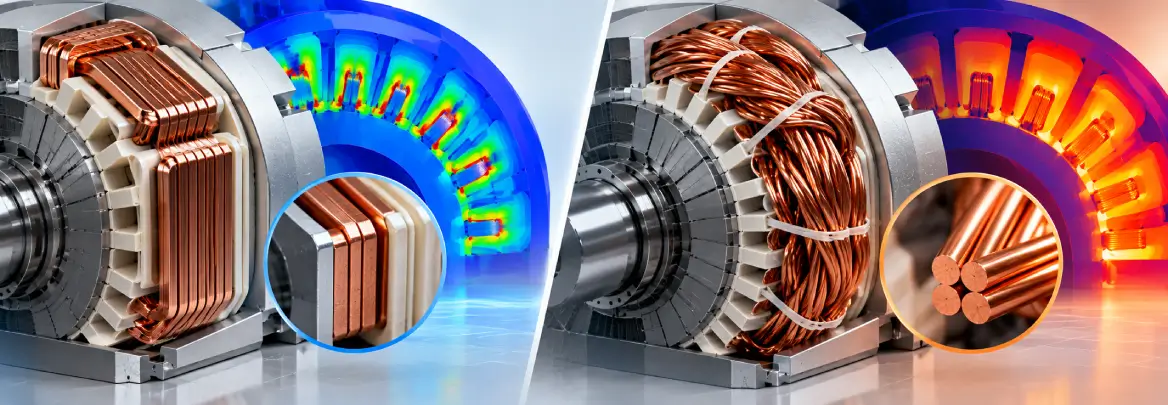
Hairpin vs. Wire-Wound Electric Motors: Electromagnetic, Thermal and Design Considerations

Winding architecture has a direct influence on an electric motor’s electrical performance, thermal behaviour, manufacturability, and packaging. Hairpin and wire-wound motors use different conductor geometries and winding arrangements, which affect slot utilization, resistance, current density, copper losses, heat transfer, and manufacturing processes. Neither architecture is universally preferable. The appropriate choice…
Read More

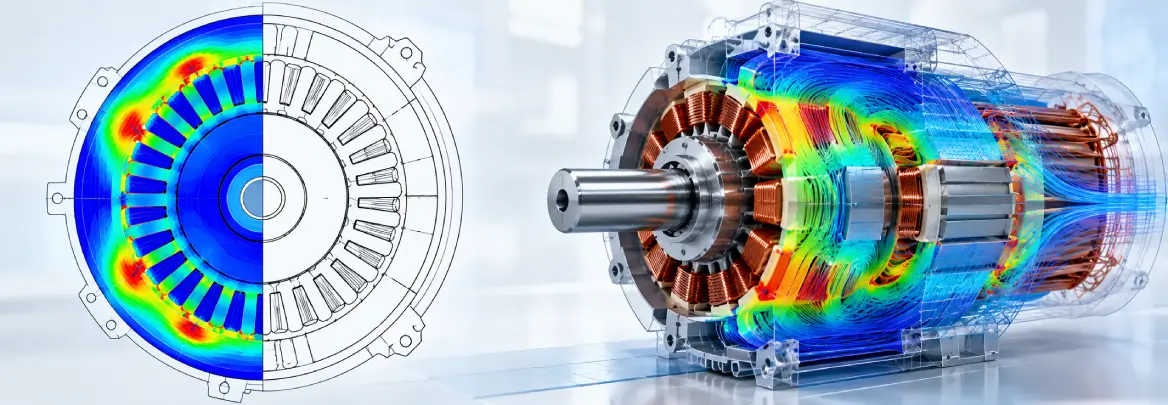
Electromagnetic and Thermal Analysis of Electric Motors

Electric motor performance cannot always be evaluated from electromagnetic performance alone. Torque, efficiency, flux density, and back EMF may meet the design requirements while localized losses create excessive temperatures in windings, cores, magnets, or other components. This makes electromagnetic and thermal analysis of electric motors a connected multiphysics problem. Electromagnetic…
Read More

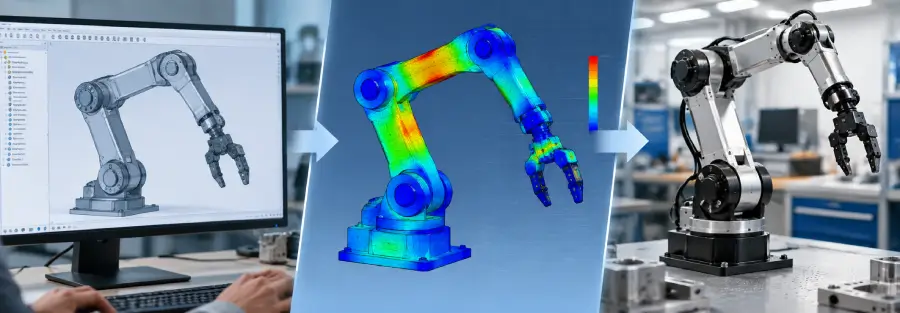
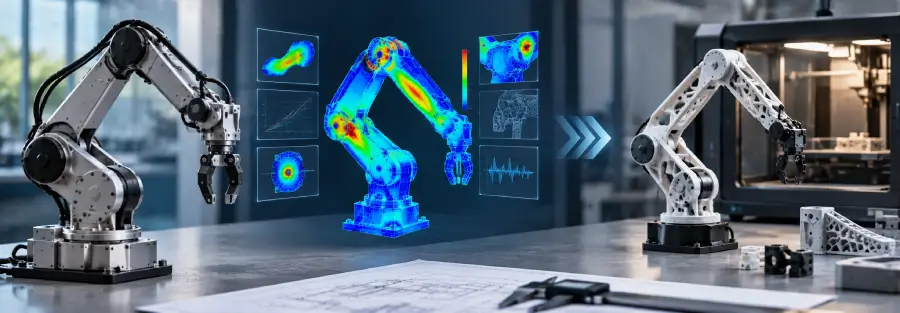
How to Perform FEA on a Robotic Arm Before Prototyping

Designing a robotic arm is not simply a matter of creating links, joints, motors, and an end effector in CAD and sending the design for manufacturing. The structure has to carry payloads, accelerate and decelerate repeatedly, withstand bending and torsional loads, maintain sufficient stiffness, and operate reliably over a large…
Read More