1. Introduction
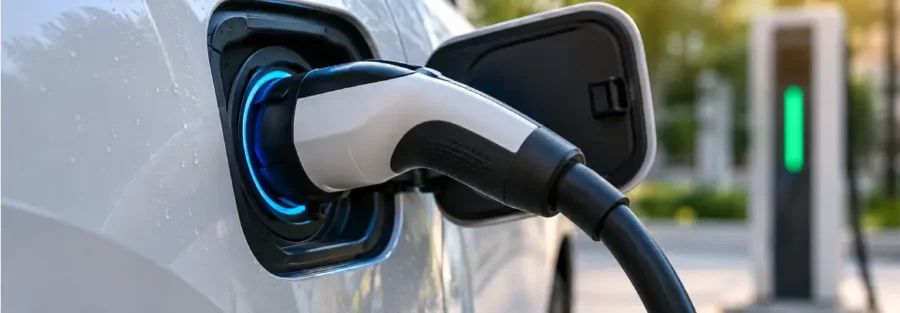
EV charging connectors experience repeated mechanical engagement and disengagement throughout their service life. Every plug-in cycle introduces insertion and withdrawal forces, contact friction, and mechanical loading across the connector housing, pins, terminals, and locking mechanism.
Over time, repeated use can cause contact wear, loss of retention force, deformation, and fatigue around critical connector features. These issues can affect electrical contact reliability and the mechanical performance of the charging interface.
Evaluating connector durability under repeated plug-in cycles helps engineers identify potential failure locations and improve connector design before production.
2. Key Engineering Considerations
Insertion and withdrawal forces: Repeated engagement generates mechanical forces across connector pins, guides, housing features, and locking components. Excessive forces can accelerate wear or damage delicate interfaces.
Contact wear and friction: Repeated sliding between mating contacts can cause surface wear, material loss, and changes in contact geometry. Contact material, plating, surface finish, and friction conditions influence durability.
Retention mechanism performance: Locking tabs, latches, and retention features must maintain sufficient engagement throughout the connector’s intended service life. Repeated loading can cause deformation or fatigue in these components.
Material fatigue: Repeated mechanical loading can initiate fatigue damage around thin sections, pin supports, latch roots, and housing features.
Thermal loading: Electrical resistance at contact interfaces generates heat during charging. Temperature rise and repeated thermal cycling can affect material properties, contact pressure, and long-term connector performance.
Dimensional stability: Wear, deformation, and thermal expansion can change alignment and contact engagement. Maintaining dimensional tolerances is important for reliable mating.
3. Engineering Analysis & Simulation Approach
A combination of structural FEA, contact analysis, and physical durability testing can help evaluate connector performance.
- CAD and component preparation: Develop the connector assembly, including housing, terminals, pins, locking features, and mating interfaces.
- Material definition: Assign mechanical and thermal properties to connector materials, including relevant properties of terminal metals and housing polymers.
- Contact modelling: Define contact interactions, friction, and mating constraints to evaluate mechanical behaviour during insertion and withdrawal.
- Structural analysis: Apply insertion, withdrawal, and retention loads to assess stress, deformation, and potential failure locations.
- Fatigue assessment: Evaluate cyclic loading around latches, terminal supports, and other repeatedly stressed features.
- Thermal analysis: Assess temperature distribution caused by electrical heating and evaluate thermal effects on connector components.
- Design evaluation: Compare material selection, contact geometry, wall thickness, and locking mechanism configurations.
FEA can identify structural weaknesses and support design comparisons. However, predicting actual contact wear and cycle life requires suitable wear models, material test data, and physical plug-in cycle testing. Electrical contact resistance should also be measured during durability testing.
4. Caliber Technologies Expertise
Caliber Technologies provides engineering simulation support for automotive and EV component development.
Relevant capabilities include:
- Structural FEA: Evaluating connector housing, terminal supports, locking features, and mounting components under mechanical loads.
- Contact analysis: Assessing contact interactions, local stresses, and deformation during connector engagement.
- Fatigue analysis: Identifying potential fatigue locations under repeated mechanical loading.
- Thermal simulation: Evaluating temperature distribution and thermal behaviour under defined operating conditions.
- Design optimisation: Comparing component geometry, material choices, and structural configurations to improve mechanical performance.
These capabilities help engineering teams identify design weaknesses, evaluate alternative configurations, and support EV charging connector development before physical validation.
5. Conclusion
Repeated plug-in cycles expose EV charging connectors to mechanical wear, cyclic stress, friction, and thermal loading. These effects can influence retention performance, contact alignment, and long-term structural reliability.
Engineering simulation helps identify critical stress locations, evaluate component deformation, and compare design configurations. Combined with physical cycle testing and electrical performance measurements, it supports a more reliable connector development process.
For EV component structural analysis, fatigue assessment, or thermal simulation support, contact Caliber Technologies at operations@thecalibertech.com.