
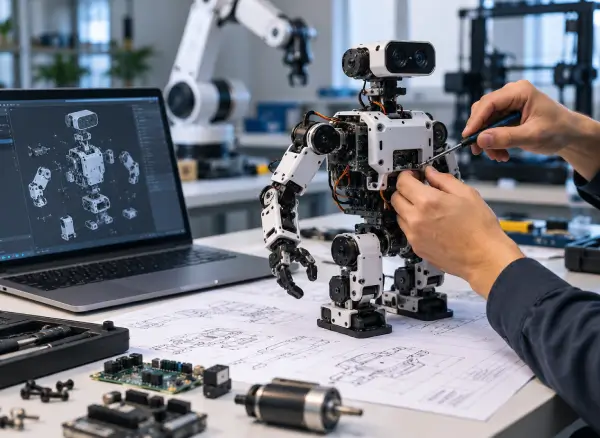
Robotics Hardware Design Services
Caliber Technologies provides robotics hardware design services for companies developing robotic arms, mechanisms, automation equipment and custom robotic systems. We design mechanical components and assemblies around the loads, movement, interfaces and operating conditions of the application.
From robot links and joint housings to actuator mounts, structural components and custom mechanisms, our engineers can take a concept, existing design or prototype and develop it into detailed engineering hardware.
Robotics Hardware Designed Around the Application
Robotic hardware cannot be designed by looking at an individual component alone. A change in link geometry can affect stiffness and actuator loading. A joint housing needs to account for bearings, shafts and forces transferred through the assembly. A mounting structure needs enough strength and rigidity without adding unnecessary mass.
Our robotics hardware design services focus on these relationships. We work on the mechanical hardware that supports the operation of the complete robotic system, with design decisions guided by the actual requirements of the application.
Our capabilities include:
- Robotic structural components
- Robot links and arms
- Joint housings
- Actuator mounts
- Bearing and shaft supports
- Mechanical brackets
- Frames and support structures
- End-effector hardware
- Custom mechanisms
- Equipment mounts
- Protective housings
- Robotic assemblies
The scope can cover a single component, a mechanical subsystem or a larger robotic hardware development project.
Custom Robotic Hardware Design
Standard components are useful where they meet the requirements. When they do not, custom hardware may be necessary to achieve the required dimensions, load capacity, movement, integration or structural performance.
We design custom robotic hardware around the way it will be used. This includes understanding the available space, interfaces, expected loads, movement, materials and manufacturing method before developing the detailed design.
Custom hardware can be developed for:
- Industrial robots
- Robotic arms
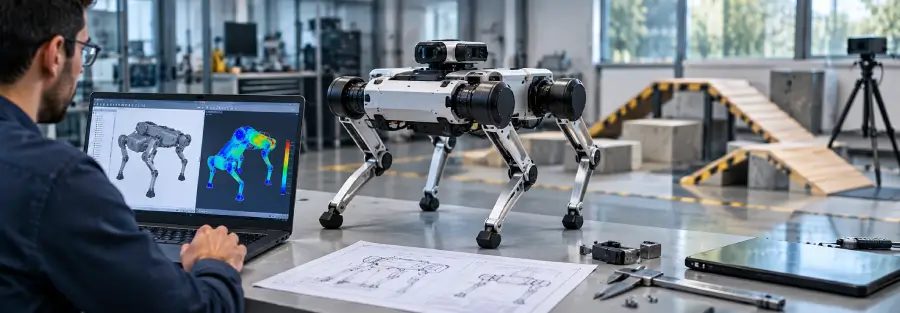
- Mobile robotic platforms
- Automated machinery
- Research and development platforms
- Specialized robotic equipment
- Custom automation systems
- Robotic tooling and mechanisms
We can work from a concept sketch, technical specification, reference model, existing CAD or physical prototype.
Robotic Component Design
The performance of a robotic system often depends on relatively small mechanical components.
A bracket may need to maintain alignment under load. A robot link may need to remain stiff while keeping its mass low. An actuator mount may need to transfer significant forces without excessive deformation. A joint housing may need to accommodate bearings, shafts and surrounding components within a restricted envelope.
Our robotic component design work covers the development and refinement of these mechanical parts.
Depending on the application, this can include:
- Robot links
- Structural plates
- Brackets
- Mounts
- Housings
- Shafts
- Supports
- Joint components
- Actuator interfaces
- End-effector structures
- Frames
- Custom mechanical parts
Each component is developed with its surrounding assembly and interfaces in mind.
Hardware Design for Robotic Joints and Mechanisms
Robotic joints and mechanisms transfer forces through multiple components while allowing controlled movement. Their design therefore requires attention to geometry, bearing arrangements, shafts, actuators, interfaces and structural support.
Our engineers can develop mechanical hardware for custom robotic joints and mechanisms where the arrangement or performance requirements cannot be met with standard components.
Design considerations may include:
- Joint configuration
- Load transfer
- Shaft loading
- Bearing support
- Actuator mounting
- Range of movement
- Available space
- Structural stiffness
- Assembly access
- Serviceability
The resulting hardware can be developed as individual components or as part of a complete mechanical assembly.
For more extensive mechanical development, our Robotics Mechanical Design Services can cover the wider structure, mechanism and assembly.
Robotic Arm Hardware Design
Robotic arms place demanding requirements on mechanical hardware. As reach and payload increase, structural components can experience higher bending moments and joint loads. At the same time, excessive mass can increase the load placed on the actuators.
Our robotic arm hardware design services cover mechanical components such as links, joint housings, actuator mounts, bearing supports and end-effector interfaces.
We consider factors such as:
- Payload
- Reach
- Structural stiffness
- Deflection
- Component mass
- Joint loading
- Actuator interfaces
- Load paths
- Operating conditions
- Manufacturing requirements
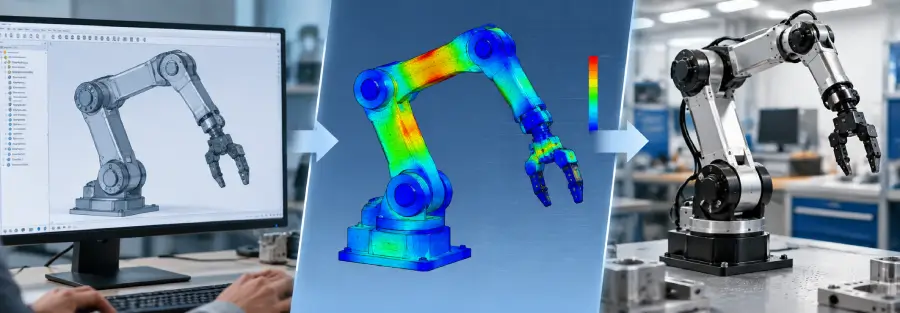
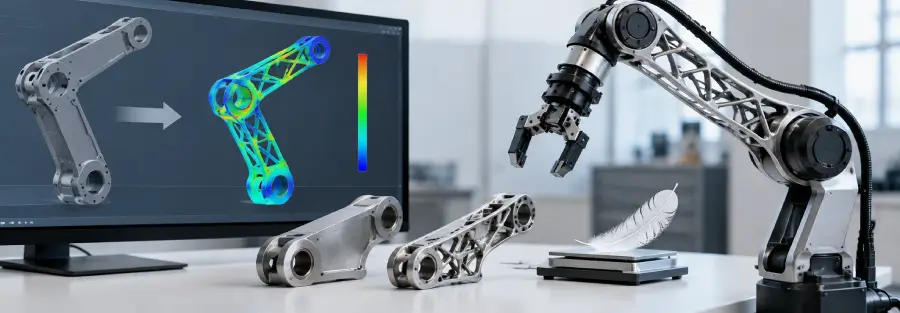
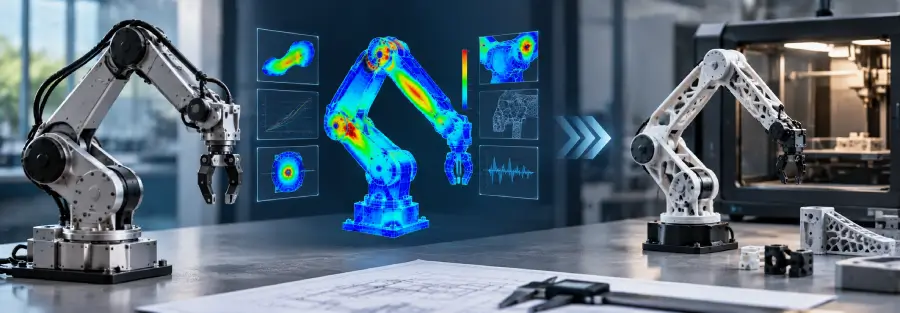
Where required, the hardware can be evaluated using structural FEA to understand stress and deformation under representative loading conditions.
This allows the mechanical design to be reviewed before moving into physical prototyping.
Robotics Hardware CAD Design
Once the mechanical approach is established, the hardware needs to be developed into accurate engineering geometry.
Our Robotics CAD Design Services support the creation and refinement of detailed parts and assemblies for robotic applications.
We can work with:
- Concept sketches
- Existing CAD models
- 2D drawings
- Technical specifications
- Reference components
- Physical prototypes
- Design revisions
CAD development can include individual parts, complete assemblies, interfaces and engineering drawings as required.
Where the design will be analyzed using CAE or FEA, the CAD model can also be prepared with the analysis requirements in mind. This makes it easier to move from design into engineering evaluation without treating the two activities as separate processes.
Engineering Analysis of Robotic Hardware
A completed CAD model does not establish whether the hardware will perform as required.
Robotic components can experience different loading conditions as the system moves through its operating range. Payload, gravity, acceleration, external forces and repeated cycles may all influence structural performance.
Our hardware design work can be supported by CAE and FEA to investigate:
- Stress
- Deformation
- Strain
- Structural stiffness
- Load paths
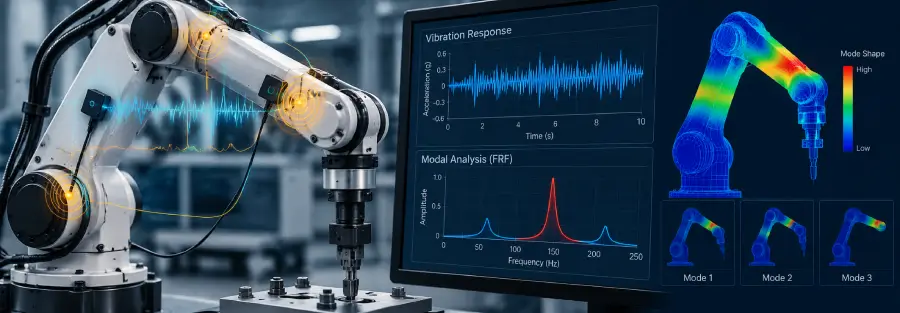
- Natural frequencies
- Fatigue behavior
- Critical areas of a component
For example, if a robotic link is experiencing excessive deflection, analysis can help determine whether the issue is related to its geometry, material, support conditions or load path.
The findings can then be used to modify the design rather than simply documenting the problem.
Design Optimization for Robotic Hardware
Robotic hardware often has to satisfy competing requirements.
It needs enough material to withstand the expected loads, but unnecessary material increases weight. It needs to be stiff, but available space may limit the size of the structure. It needs to perform reliably while remaining practical to manufacture.
Design optimization can help find a more suitable balance.
Depending on the project, we can investigate opportunities to improve:
- Component weight
- Structural stiffness
- Stress distribution
- Material usage
- Load transfer
- Mechanical interfaces
- Overall component configuration
For a robotic arm, for example, reducing the mass of a link can affect the loads seen by the actuator and other upstream components. Any weight reduction therefore needs to be considered in the context of the complete mechanical system.
Designing Hardware for Manufacturing
A robotic component ultimately has to be manufactured and assembled. The design therefore needs to reflect how the hardware will actually be produced.
Depending on the project, we can consider requirements associated with:
- CNC machining
- Sheet metal fabrication
- Additive manufacturing
- Fabricated structures
- Fasteners
- Tolerances
- Assembly access
- Material selection
- Component interfaces
The right approach depends on whether the hardware is being developed for an early prototype, low-volume production or a larger manufacturing program.
Considering these requirements during design can reduce unnecessary changes later in the development process.
From Concept to Finished Engineering Design
Our hardware design process can be adapted to the stage your project has reached.
Requirements
We establish the function of the hardware, relevant loads, interfaces, dimensional limitations and manufacturing requirements.
Concept Development
Mechanical configurations are developed around the required function and available design envelope.
Detailed Design
The selected approach is developed into detailed parts and assemblies.
Engineering Analysis
Where required, CAE and FEA are used to evaluate structural behavior under defined loading conditions.
Design Refinement
The hardware is revised based on analysis results, mechanical requirements and manufacturing considerations.
Engineering Documentation
The final design can be prepared with the CAD models, drawings and technical documentation required for the next stage.
Not every project requires all of these stages. An existing component may only require redesign and FEA, while a new robotic subsystem may require the complete design process.
When You May Need Robotics Hardware Design Support
Companies typically bring in external engineering support when they need additional capacity or specialist knowledge for a particular hardware requirement.
Our services can be useful when:
You are developing a new robot
Your team has defined the system requirements but needs mechanical hardware developed around them.
An existing component needs redesign
The hardware may be too heavy, too flexible, difficult to manufacture or not meeting its expected performance.
A prototype needs further development
An early prototype needs to become a more detailed and robust engineering design.
A robotic arm requires structural improvements
Links, joints or mounts need to be redesigned around payload, reach or stiffness requirements.
A custom mechanism is required
The application needs mechanical hardware that is not available as a standard component.
An existing CAD design needs validation
The design is complete but requires FEA or engineering analysis before prototyping or manufacturing.
Why Caliber Technologies for Robotics Hardware Design?
Robotic hardware design involves more than producing a 3D model. The component needs to work with the rest of the machine, carry the required loads, maintain the necessary stiffness and suit the intended manufacturing process.
Caliber Technologies combines mechanical design, CAD, CAE, FEA, simulation and design optimization within its robotics engineering capabilities.
Our work can therefore continue from the initial hardware concept into detailed CAD and, where required, engineering analysis and design refinement. This is particularly useful when a component needs to be developed and evaluated as part of the larger robotic system.
Whether you need one custom component or support for a larger hardware development program, the engineering scope can be built around the work your team needs completed.
Robotics Hardware Design Deliverables
Depending on the project, deliverables may include:
- 3D CAD models
- Robotic components
- Mechanical assemblies
- Engineering drawings
- Interface models
- Design revisions
- FEA-ready CAD
- Structural analysis results
- Design optimization studies
- Engineering documentation
- Prototype-ready design data
The exact deliverables and formats are established according to the project requirements.
Need Custom Robotics Hardware?
Whether you are developing a robotic arm, custom mechanism, automation system or a complete robotic product, the mechanical hardware needs to be designed around the conditions it will face in operation.
Caliber Technologies can support the development of your robotic hardware from mechanical concept and CAD through analysis and design refinement.
Share your existing design or project requirements with our engineering team.
Frequently Asked Questions
What does robotics hardware design include?
Robotics hardware design can include the development of mechanical components, structures, joints, mounts, housings, links, mechanisms and assemblies used in robotic systems. The work may also include CAD development, engineering analysis and design refinement.
Can you design custom hardware for a robotic arm?
Yes. We can design robotic arm components such as links, joint housings, actuator mounts, bearing supports, structural members and end-effector interfaces around the required payload, reach, stiffness and dimensional constraints.
Can you redesign an existing robotic component?
Yes. Existing hardware can be reviewed and redesigned where there are issues related to weight, stiffness, stress, deformation, manufacturing or integration with the rest of the robotic system.
Can existing CAD be used for the project?
Yes. Existing CAD models, drawings or assemblies can be used as the starting point for design changes, detailed development, FEA preparation or structural evaluation.
Do you provide FEA for robotic hardware?
Yes. Depending on the requirements, FEA can be used to study stress, deformation, stiffness, modal behavior and fatigue-related performance under defined operating conditions.
Can you reduce the weight of robotic hardware?
Yes. Existing components can be reviewed for opportunities to reduce mass while maintaining the required structural performance. The effect of weight reduction on stiffness, actuator loading and dynamic behavior also needs to be considered.
Can the hardware be designed for a specific manufacturing process?
Yes. Manufacturing requirements such as CNC machining, sheet metal fabrication, additive manufacturing or fabrication can be considered during the design process.
What information is needed to start a project?
A concept, existing CAD, drawing, technical specification or description of the required hardware can be used to begin the discussion. Information such as payload, loads, dimensions, interfaces, materials and manufacturing requirements can then be established during project scoping.
How We Provide Services
Project Scope Based Services
Time Based Projects
On-site Resource Assignment
Strategic Consulting Services
We are very glad to get client review.
Have a question? Send us a message, and we’ll respond shortly.
Tackle your toughest technical challenges in automotive engineering and reach your product development goals by leveraging the expertise of our trusted engineers.