
The chassis is the main supporting structure of a vehicle. It provides a foundation for mounting important components such as the engine, transmission, suspension, steering system and body.
Automotive chassis design plays an important role in vehicle strength, handling, stability and safety. Different chassis types are used depending on the vehicle’s size, weight, purpose and operating conditions.
From passenger cars to commercial trucks and off-road vehicles, each chassis configuration has its own design characteristics and applications.
1. Ladder Frame Chassis
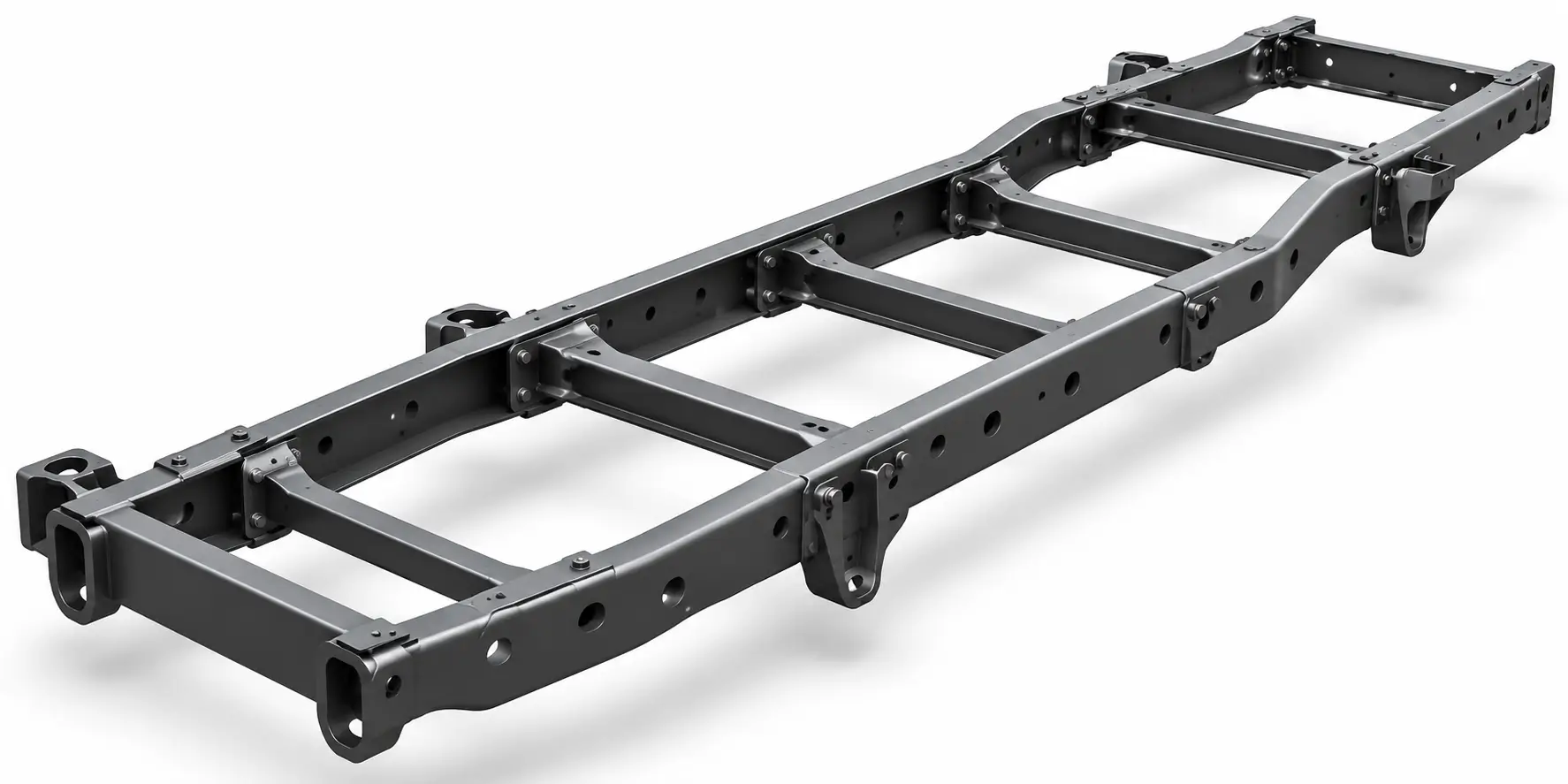
A ladder frame chassis consists of two long parallel longitudinal rails connected by multiple cross members. Its structure resembles a ladder, providing a strong base for mounting vehicle components.
This design is commonly used in pickup trucks, heavy commercial vehicles, SUVs and off-road vehicles.
Key characteristics:
- Strong structure for carrying heavy loads.
- Suitable for demanding road and off-road conditions.
- Separate body and frame construction.
- Can be easier to repair or modify in certain applications.
2. Monocoque Chassis
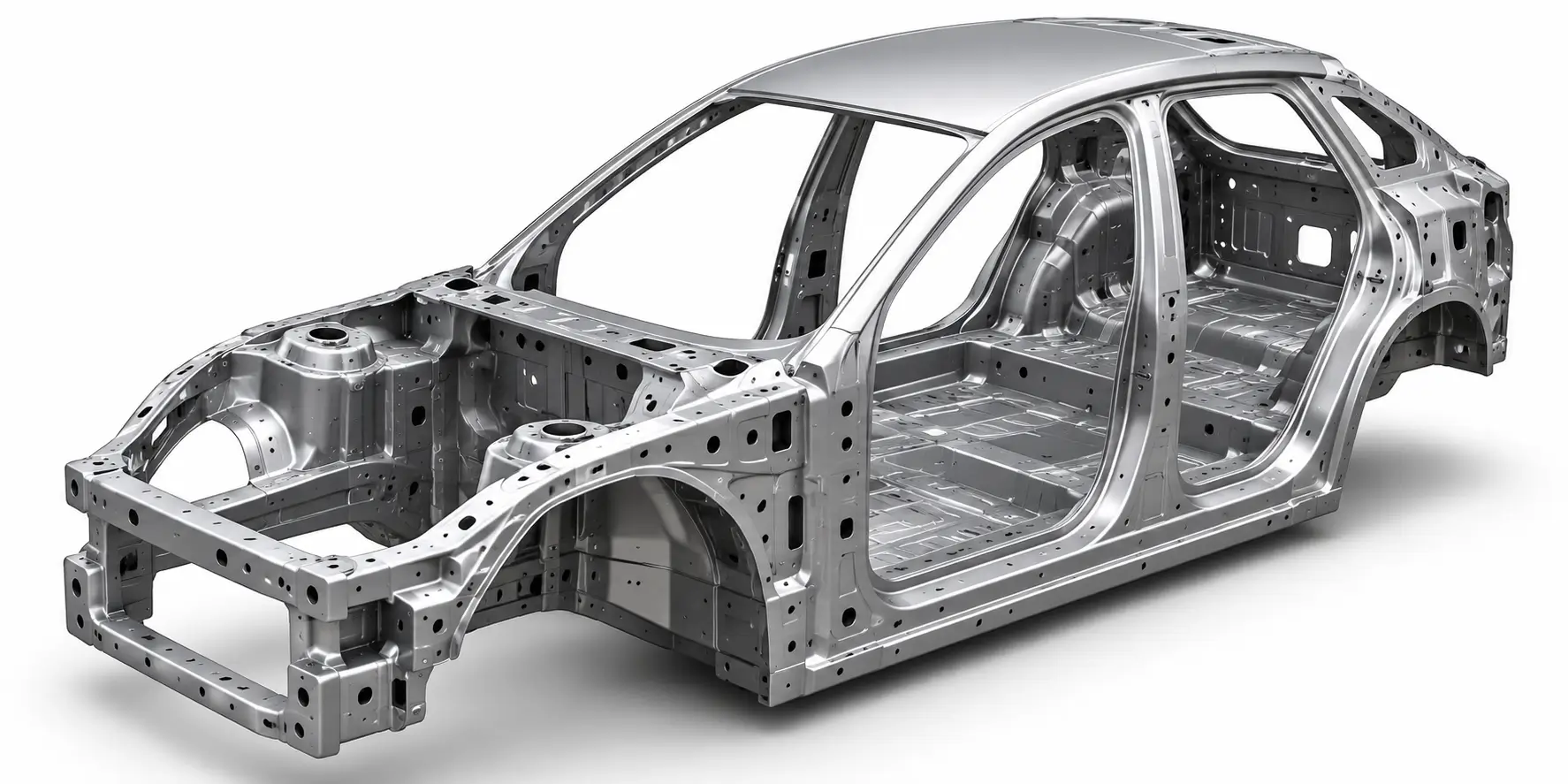
A monocoque chassis integrates the vehicle body and structural framework into a single load-bearing structure. Loads are distributed across different body panels, floor sections, pillars and reinforcements.
It is widely used in modern passenger cars and crossovers because it offers a good balance between weight, structural stiffness and packaging.
Key characteristics:
- Lower weight compared with many traditional body-on-frame designs.
- Efficient use of available space.
- Good structural integration between body and chassis.
- Requires careful structural design around load-bearing sections.
3. Backbone Chassis
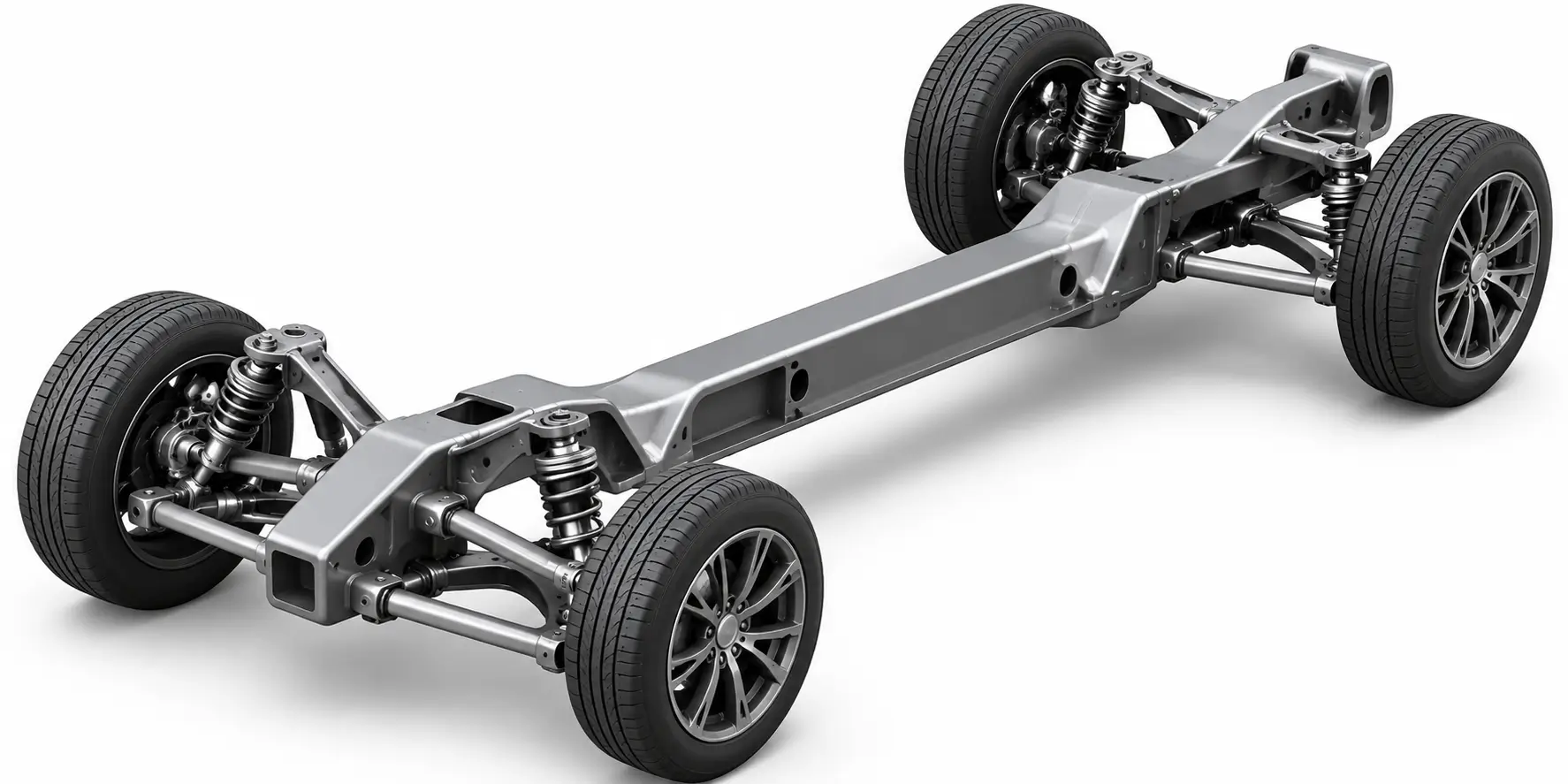
A backbone chassis uses a strong central structural member running along the length of the vehicle. The engine, suspension and other components are mounted around this central structure.
This design has been used in certain sports cars and specialised vehicles.
Key characteristics:
- Central structure provides longitudinal strength.
- Relatively simple main structural layout.
- Can offer good torsional stiffness when properly designed.
- Packaging and body integration can be challenging.
4. Tubular Space Frame Chassis
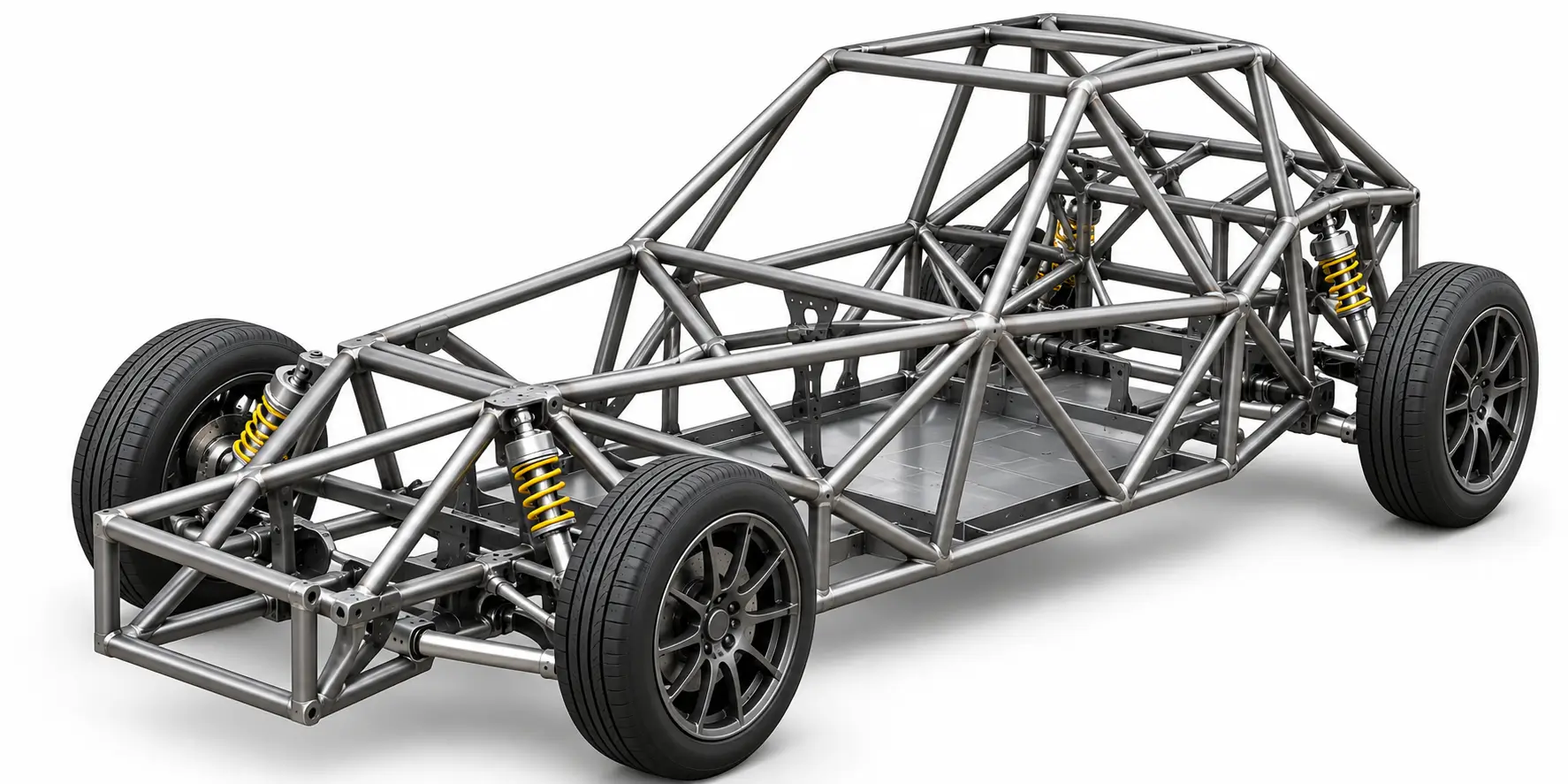
A tubular space frame consists of interconnected metal tubes arranged in a structural framework. The tubes work together to carry loads and maintain structural rigidity.
This chassis type is commonly used in racing cars, prototype vehicles and specialised performance applications.
Key characteristics:
- High structural stiffness for its weight when properly designed.
- Flexible design for specialised vehicle layouts.
- Suitable for performance and prototype vehicles.
- Requires accurate joint design and fabrication.
5. Aluminium Space Frame Chassis
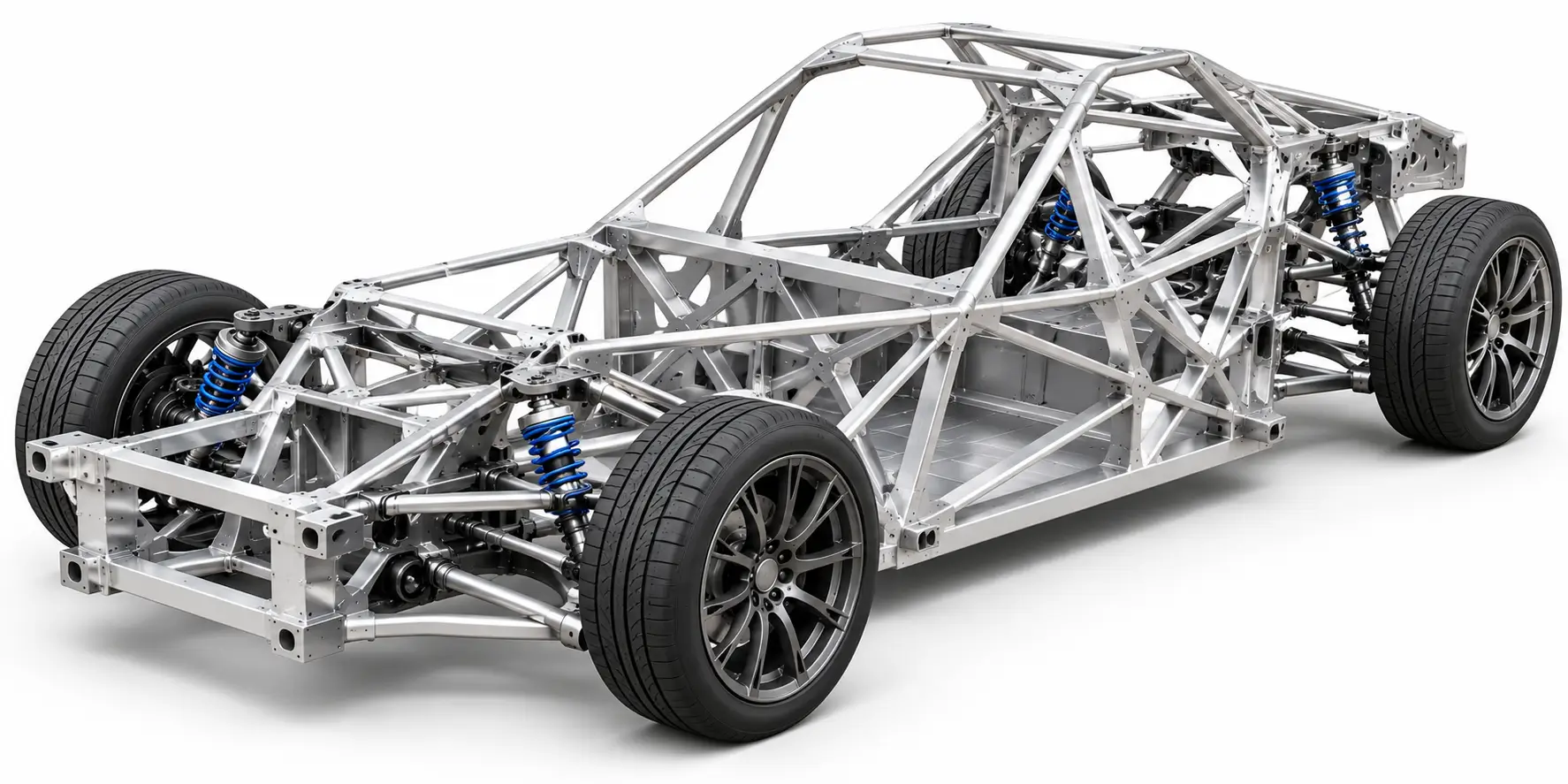
An aluminium space frame uses aluminium extrusions, castings and structural sections connected to form a load-bearing vehicle structure.
It is used in selected sports cars, premium vehicles and electric vehicle platforms where weight reduction is an important design objective.
Key characteristics:
- Lower material density than steel.
- Supports lightweight vehicle construction.
- Requires careful joint and connection design.
- Manufacturing and joining methods influence structural performance.
How Do Different Chassis Types Compare?
| Chassis type | Common applications | Main design focus |
|---|---|---|
| Ladder frame | Trucks, pickups, off-road SUVs | Load carrying and durability |
| Monocoque | Passenger cars, crossovers | Weight and structural integration |
| Backbone | Sports and specialised vehicles | Central structural strength |
| Tubular space frame | Racing and prototype vehicles | Stiffness and weight |
| Aluminium space frame | Premium cars and selected EVs | Lightweight structural design |
What Factors Affect Automotive Chassis Design?
Selecting a chassis configuration depends on the vehicle’s intended use and engineering requirements. Engineers must consider several factors during chassis development.
- Vehicle Weight and Payload: The structure must support vehicle mass, passengers, cargo and other applied loads.
- Structural Strength: Chassis members and joints must withstand forces generated during acceleration, braking and cornering.
- Torsional Stiffness: The structure must resist twisting under uneven road inputs and vehicle manoeuvres.
- Suspension Integration: Suspension mounting locations and load paths influence chassis geometry and stiffness.
- Material Selection: Steel, aluminium and other materials offer different strength, weight, manufacturing and cost characteristics.
- Manufacturing Requirements: Joining methods, fabrication processes and production volume influence the final design.
How Is Automotive Chassis Strength Evaluated?
Automotive chassis structures experience different loads during normal driving, braking, cornering and operation on uneven roads. Engineers need to understand how these forces affect structural strength and durability.
Finite Element Analysis (FEA) helps evaluate chassis behaviour under defined loading conditions. Engineers can assess:
- Stress distribution across chassis rails and cross members.
- Structural deformation under applied loads.
- Torsional stiffness and bending behaviour.
- Stress concentrations around joints and mounting points.
- Fatigue performance under repeated loading.
- Weight reduction opportunities while maintaining structural requirements.
These evaluations help identify weak structural areas and compare design alternatives before physical testing.
Automotive Chassis Engineering Support from Caliber Technologies
Caliber Technologies provides engineering design and simulation support for automotive and commercial vehicle chassis development.
Our capabilities include chassis design, structural FEA, load case development and simulation-based validation. We support engineering teams in evaluating chassis structures, suspension mounting points, cross members and other load-bearing components.
If you are developing a new chassis or modifying an existing vehicle structure, contact our engineering team to discuss your requirements.