
Engineering Services for EV & Mobility Startups
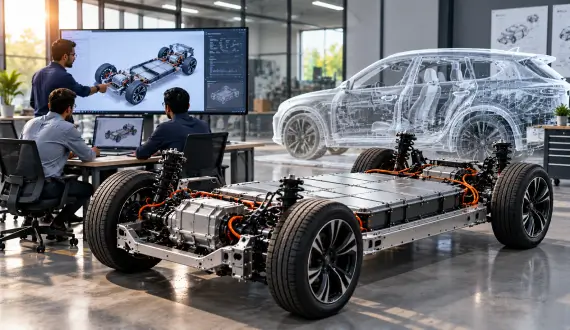
Developing electric vehicles requires careful integration of mechanical systems, electric powertrains, battery packages and vehicle structures. Startups must balance performance, weight, packaging, durability and development costs while moving from concept design to prototype testing.
Caliber Technologies supports EV development teams with engineering expertise in product design, CAE simulation, structural analysis and e-powertrain engineering.
E-Powertrain Design & Integration
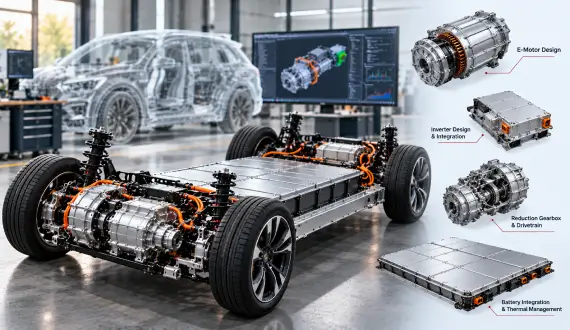
Electric powertrains operate at high rotational speeds and experience demanding torque and thermal conditions. Motor, gearbox and drivetrain components must work together within strict packaging and performance requirements.
Engineering considerations include rotor stress, gear loading, shaft alignment, housing stiffness and NVH behaviour. These factors influence powertrain reliability, efficiency and durability.
Battery Pack Design & Structural Integration
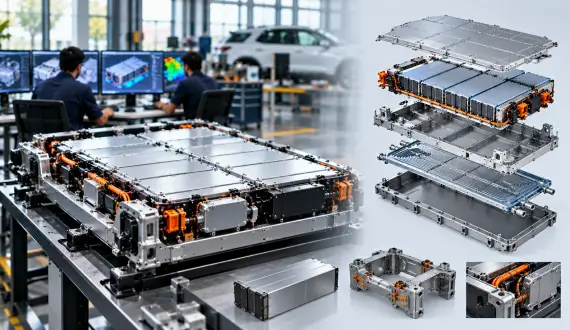
Battery packs must fit within the vehicle architecture while meeting weight, space and structural requirements. Mounting arrangements and enclosure design must account for vehicle loads, vibration, component clearances and service access.
Structural assessment helps evaluate enclosure stiffness, mounting loads, deformation and the integration of the battery pack with the vehicle chassis.
Vehicle Design & Lightweight Structures
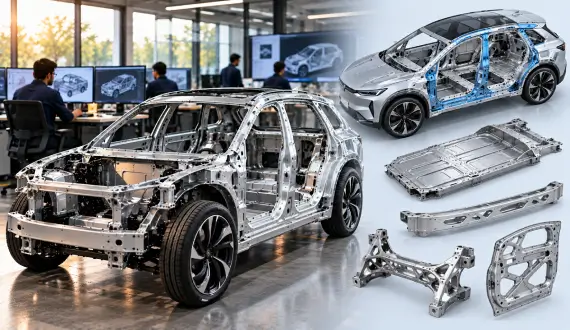
EV startups must develop vehicle structures and mechanical assemblies within defined weight, cost and manufacturing constraints. Changes to component geometry or material selection can affect stiffness, strength, packaging and assembly.
CAD engineering and structural assessment help evaluate component interfaces, load-bearing structures and opportunities for weight reduction while maintaining required performance.
CAE Simulation & Structural Validation
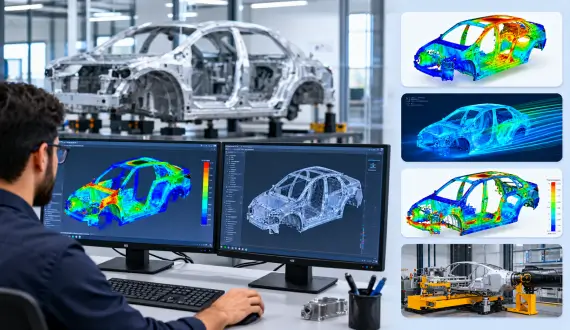
Physical prototypes are expensive to modify, making early engineering assessment important for EV development teams. Structural weaknesses, excessive deformation and vibration issues can delay testing and require design changes.
CAE simulation helps evaluate stress, deformation, stiffness and dynamic response under defined operating conditions. These findings support design refinement before physical validation.
Thermal Management & Component Performance
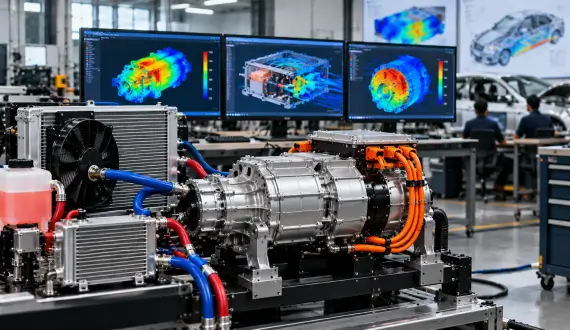
Electric motors, power electronics and battery systems operate within defined temperature limits. Heat generation, cooling performance and temperature distribution can influence component performance, durability and system reliability.
Thermal analysis and, where applicable, CFD simulation help assess heat transfer, airflow and cooling-system performance during EV system development.
Durability, NVH & Design Validation
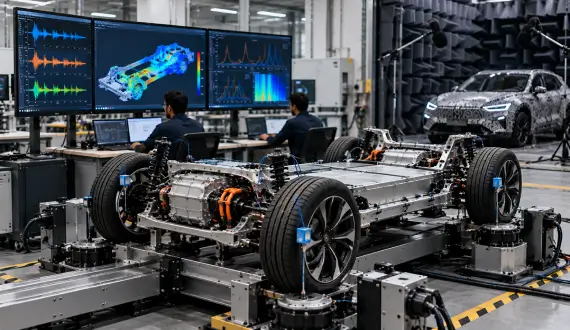
EV components experience repeated loading, rotating forces and vibration throughout vehicle operation. Motor mounts, gearbox housings, chassis structures and other mechanical components must withstand these conditions over their intended service life.
Fatigue assessment, modal analysis and NVH evaluation help identify potential durability risks and vibration-sensitive designs before production readiness.
How We Provide Services
Project Scope Based Services
Time Based Projects
On-site Resource Assignment
Strategic Consulting Services
We are very glad to get client review.


Have a question? Send us a message, and we’ll respond shortly.
Tackle your toughest technical challenges in automotive engineering and reach your product development goals by leveraging the expertise of our trusted engineers.